Appliance and Supply Line Leaks in Mableton, GA
A split washer hose, a dishwasher seal or an ice maker valve in a Mableton kitchen or laundry room leaks under cabinets and flooring before it shows. The extraction crew pulls it out and dries what is hidden.
Get the cabinet and floor water pulledOpen 24/7: (888) 532-4616
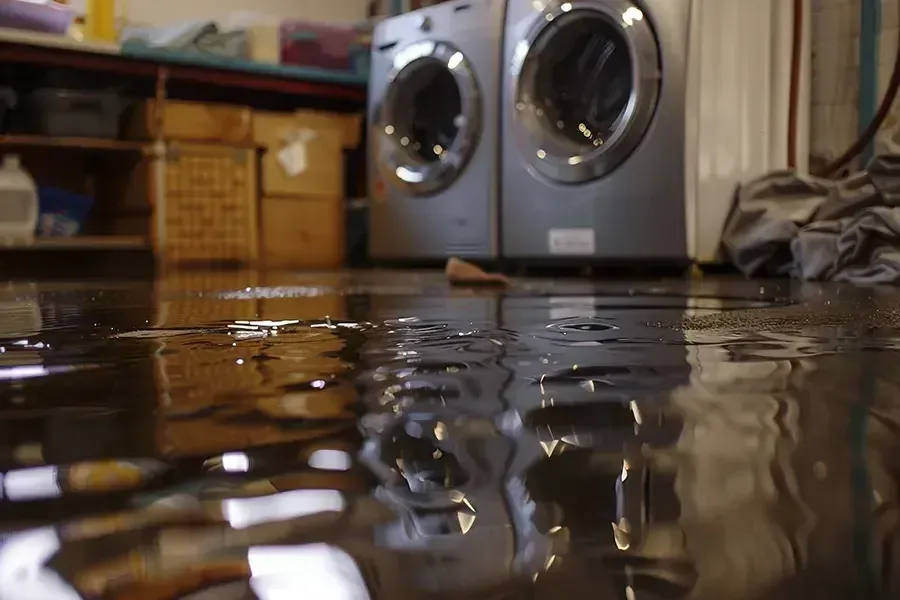
First steps for appliance and supply line leaks in Mableton
Close the supply valve
Shut the valve behind the washer, under the sink or behind the fridge, or close the main.
Unplug the appliance
Pull the plug if it can be reached from a dry spot, or switch off its breaker.
Pull out the toe kicks
If water went under the cabinets, remove the kick plates so air can reach underneath.
Keep the failed part
Save the hose or valve that failed and photograph it for the claim.
What does appliance and supply line leaks cost in Mableton, GA?
Appliance leak water damage here typically runs $600 to $4,500, depending on whether the water stayed on the surface or got under cabinets and flooring. The water category, square footage, material class and how fast drying started move the number most.
Surface water, one room
$600 to $1,500- Extraction
- Toe kicks removed
- Moisture readings
Under cabinets and flooring
$1,500 to $3,000- Cabinet base drying
- Plank flooring lifted
- Subfloor dried
Leak into the room below
$3,000 to $4,500- Ceiling below opened
- Two levels drying
- Daily logs
These are typical ranges, not a quote. The water category, the square footage, the material class and how fast drying started move the number most. The water damage cost calculator gives a planning range.
What a complete appliance and supply line leaks job includes
The order of the work is what separates a finished dry-out from a cosmetic one.
Dispatch around the clock
The response team works 24/7 and sends the nearest available crew with pumps, meters and drying gear on the truck.
Measured to IICRC S500
Moisture mapping comes first, and the equipment stays until readings match a dry reference, not until a room looks dry.
A claim file built daily
Most crews log moisture readings every day and take timestamped photos before anything is cut out, so the file matches the loss.
Built for clay, creeks and crawlspaces
Daylight basements, crawlspaces under postwar ranches and creek-side lots are everyday work for local restoration pros.
Appliance leaks are the slow, hidden kind of water damage. A rubber washer hose bulges and splits, a dishwasher door seal weeps, a plastic ice maker tube cracks behind the refrigerator, or a toilet supply connector lets go. The water runs under cabinets, toe kicks and flooring, where nobody sees it for days.
The usual sources
- Rubber washing machine hoses, often original to the house
- Dishwasher supply, drain and door seal leaks
- Refrigerator ice maker and water dispenser tubing
- Toilet and sink supply connectors and shutoff valves
Clean supply water is Category 1. Water from a washer drain or dishwasher discharge is Category 2 and is cleaned before drying.
Washer or dishwasher leaked under the floor? Get the hidden water found and dried.
Trace the hose or valve leakDrying under cabinets and flooring
Water under base cabinets soaks the subfloor and the bottom of the cabinet box, which is often particleboard. The crew removes toe kicks, drills small holes in the cabinet bases where needed and blows dry air underneath, so the cabinets can often stay. Laminate and vinyl plank that trap water are usually lifted. Readings decide what stays and what goes.
Laundry rooms over finished spaces
A second-floor laundry, or a main-floor laundry over a finished basement, sends water straight through the ceiling below, which turns an appliance leak into a ceiling leak as well. Braided steel hoses and a leak pan with a drain under the washer lower the risk. Drying details are under structural drying.
Outside references: EPA WaterSense leak checks and EPA WaterSense.
How appliance and supply line leaks is handled, start to finish
- 01
Stop the leak
Close valves and confirm the source.
- 02
Extract
Pull water from floors and cabinet bases.
- 03
Dry hidden areas
Force air under cabinets and flooring.
- 04
Verify
Read the subfloor and cabinets dry.
Appliance and supply line leaks across Mableton and south Cobb
Coverage runs across ZIP 30126, from the older streets off Floyd Road out along Veterans Memorial Highway and South Gordon Road, down to the homes near Nickajack Creek and the Chattahoochee River side.
Nearby coverage reaches Austell, Smyrna, Vinings, Powder Springs, Lithia Springs, Marietta, Atlanta, Kennesaw.
Appliance and Supply Line Leaks questions, answered
How long do washing machine hoses last?
Rubber hoses often last about five years before they bulge or crack. Braided steel hoses last longer, and both should be checked whenever the washer is moved.
Do kitchen cabinets have to be removed after a leak?
Not always. Toe kicks come off and dry air is forced underneath, which saves many cabinets. Particleboard that swelled or came apart is replaced.
Is appliance leak water damage covered by insurance?
A sudden hose or valve failure is often covered after the deductible. A slow leak that went on for weeks often is not. Check your own policy with your insurer.
How can I tell if water got under the flooring?
Soft spots, cupped planks, lifting edges or a musty smell near the appliance suggest it. A moisture meter and a thermal camera confirm it without pulling up the floor.
How long does drying take after a dishwasher leak?
Two to five days is typical when the water is caught early. Subfloor under laminate or vinyl plank, or water that sat for days, takes longer.
Water under the cabinets or the laundry floor?
The extraction crew pulls the water from under cabinets and flooring and dries the subfloor.