Sewage Backup Cleanup in Mableton, GA
A backed-up toilet, floor drain or cleanout in a Mableton home is Category 3 water from the start. The mitigation team contains it, removes what it touched and disinfects before any drying begins.
Get the sewage contained and removedOpen 24/7: (888) 532-4616
First steps for sewage backup cleanup in Mableton
Stop using water
Do not flush, run sinks or start the washer, because every gallon adds to the backup.
Keep everyone out
Close the door to the affected area and keep people and pets away.
Do not touch it
Do not mop or vacuum sewage; household tools spread it.
Call a plumber and a cleanup crew
The plumber clears the pipe; the mitigation team cleans and dries.
What does sewage backup cleanup cost in Mableton, GA?
Sewage backup cleanup here typically runs $2,500 to $12,000, because porous materials come out and every surface is disinfected before drying. The water category, square footage, material class and how fast drying started move the number most.
Bathroom or small area
$2,500 to $5,000- Containment and PPE
- Flooring and lower drywall removed
- Antimicrobial applied
Basement or several rooms
$5,000 to $9,000- Carpet and pad discarded
- Wall cavities treated
- Structural drying
Widespread or long-standing
$9,000 to $12,000- Cabinets and insulation removed
- Air scrubbers running
- Daily moisture logs
These are typical ranges, not a quote. The water category, the square footage, the material class and how fast drying started move the number most. The water damage cost calculator gives a planning range.
What a complete sewage backup cleanup job includes
The order of the work is what separates a finished dry-out from a cosmetic one.
Dispatch around the clock
The response team works 24/7 and sends the nearest available crew with pumps, meters and drying gear on the truck.
Measured to IICRC S500
Moisture mapping comes first, and the equipment stays until readings match a dry reference, not until a room looks dry.
A claim file built daily
Most crews log moisture readings every day and take timestamped photos before anything is cut out, so the file matches the loss.
Built for clay, creeks and crawlspaces
Daylight basements, crawlspaces under postwar ranches and creek-side lots are everyday work for local restoration pros.
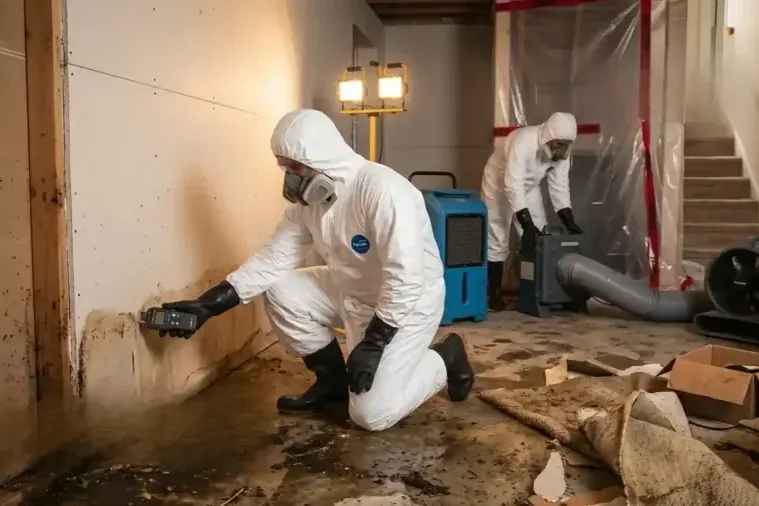
Sewage is Category 3 water the moment it backs up. It carries bacteria and viruses, so the job starts with protection, not drying: crews wear suits, gloves, boots and respirators, and set containment so contaminated air and debris do not move into clean rooms. Anyone with a weak immune system, and pets, should stay out of the affected area until it is cleaned.
Why backups happen here
- Roots in older clay and cast iron sewer laterals
- Grease and wipes building up in the lateral
- A basement floor drain sitting below the street sewer during heavy rain
- A failed or overwhelmed septic system on larger lots
Homes with a basement bathroom or floor drain are the most exposed, because they sit lowest on the pipe.
Sewage coming up a drain? Stop using water and keep everyone out of the area.
Phone in the black water backupWhat gets removed and what gets cleaned
Porous materials the sewage touched are removed, not dried: carpet and pad, drywall and insulation above the waterline, particleboard cabinets and upholstered items. Hard surfaces like tile, concrete and framing are cleaned and then treated with an EPA-registered antimicrobial applied at its labeled dwell time. Only after that does structural drying start, with readings logged daily. Contents that were touched are photographed and listed for the claim before they are discarded.
Who clears the pipe
A plumber clears or repairs the sewer lateral; the restoration team handles the cleanup inside. A backup in a basement is covered further under basement flooding cleanup, and outside flood water under storm and flash flood cleanup.
Outside references: EPA sanitary sewer overflows and Ready.gov flood safety.
How sewage backup cleanup is handled, start to finish
- 01
Contain
Set barriers and full protective gear.
- 02
Extract and remove
Pull sewage and porous materials out.
- 03
Disinfect
Apply EPA-registered antimicrobial at dwell time.
- 04
Dry and verify
Dry the structure to a dry reading.
Sewage backup cleanup across Mableton and south Cobb
Coverage runs across ZIP 30126, from the older streets off Floyd Road out along Veterans Memorial Highway and South Gordon Road, down to the homes near Nickajack Creek and the Chattahoochee River side.
Nearby coverage reaches Austell, Smyrna, Vinings, Powder Springs, Lithia Springs, Marietta, Atlanta, Kennesaw.
Sewage Backup Cleanup questions, answered
Can carpet be cleaned after a sewage backup?
No. Carpet and pad touched by sewage are Category 3 materials and are removed and discarded. Hard flooring like tile can usually be cleaned and disinfected.
Is it safe to stay in the house during sewage cleanup?
Often, if the affected area is contained and closed off and the household stays out of it. Anyone with a weak immune system may want to stay elsewhere until cleaning is done.
Does homeowners insurance cover sewage backup?
Many standard policies exclude sewer and drain backup unless an endorsement was added. Check your own policy with your insurer before assuming either way.
What is an antimicrobial dwell time?
It is the time the product label says the surface must stay wet with the antimicrobial for it to work. Wiping it off early does not disinfect, which is why crews follow the label.
How can sewage backups be prevented?
Keeping grease and wipes out of drains, having roots cleared from older laterals and installing a backwater valve on a low basement drain all lower the risk. A plumber can run a camera through the pipe to check it.
Sewage on the basement floor?
The mitigation team contains the area, removes contaminated materials, disinfects and dries.