Structural Drying and Dehumidification in Mableton, GA
After the water is out, the framing, subfloor and walls of a Mableton home still hold it. The drying team sets LGR dehumidifiers and air movers to the load and reads every wet material until it is dry.
Get dehumidifiers on the wet framingOpen 24/7: (888) 532-4616
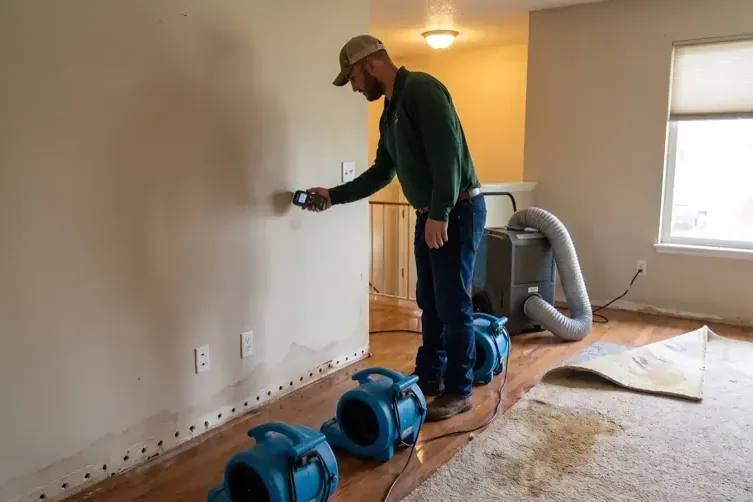
First steps for structural drying and dehumidification in Mableton
Keep the house closed
Shut windows and doors so the dehumidifiers dry the house, not the outdoors.
Leave the equipment running
Do not turn off air movers or dehumidifiers overnight, even if they are loud.
Keep the thermostat steady
A steady indoor temperature helps the drying, so ask the tech before changing it.
Stay off the marked spots
Leave the meter marks and vent holes alone so the daily readings stay accurate.
What does structural drying and dehumidification cost in Mableton, GA?
Structural drying here typically runs $1,000 to $7,000, driven mostly by how many rooms are wet and how many equipment days the materials need. The water category, square footage, material class and how fast drying started move the number most.
One or two rooms
$1,000 to $2,500- Two to four air movers
- One LGR dehumidifier
- Daily readings
Several rooms or a basement
$2,500 to $5,000- Wall cavity drying
- Several LGR units
- Psychrometric logs
Hardwood, slab or a whole floor
$5,000 to $7,000- Desiccant dehumidifiers
- Floor drying mats
- Extended monitoring
These are typical ranges, not a quote. The water category, the square footage, the material class and how fast drying started move the number most. The water damage cost calculator gives a planning range.
What a complete structural drying and dehumidification job includes
The order of the work is what separates a finished dry-out from a cosmetic one.
Dispatch around the clock
The response team works 24/7 and sends the nearest available crew with pumps, meters and drying gear on the truck.
Measured to IICRC S500
Moisture mapping comes first, and the equipment stays until readings match a dry reference, not until a room looks dry.
A claim file built daily
Most crews log moisture readings every day and take timestamped photos before anything is cut out, so the file matches the loss.
Built for clay, creeks and crawlspaces
Daylight basements, crawlspaces under postwar ranches and creek-side lots are everyday work for local restoration pros.
Extraction removes the liquid water. Structural drying removes the water that soaked into drywall, framing, subfloor, concrete and insulation, and it is the part of the job that decides whether the house is actually dry or only looks dry.
How drying is planned
The tech maps moisture with a thermal camera and pin and pinless meters, then takes a dry reference reading from an unaffected part of the same house. The loss gets a class from 1 to 4 under IICRC S500, based on how much water was absorbed and by what. Air movers and LGR dehumidifiers are sized to that class and to each room's volume.
Water out but the walls still wet? Drying starts with a moisture map.
Book a moisture map of the houseWhy Georgia humidity changes the plan
Summer air here often runs humid enough that opening windows adds moisture instead of removing it. LGR, or low grain refrigerant, dehumidifiers keep pulling water out of the air even when it is warm and damp, and the house stays closed so the equipment works on the wet materials, not the outdoors. Hardwood, concrete and tight crawl spaces may also get desiccant units.
Daily readings and the finish line
- Moisture readings on every marked spot, logged daily
- Temperature and humidity inside and outside, the psychrometric log
- Equipment moved as areas dry
- Pulled only when materials sit within 2 to 4 points of the dry reference
That log is what an insurer reads to follow each equipment day. The first step, water extraction, and two of the slowest cases, crawl space water removal and slab leak drying, have their own pages.
Outside references: Ready.gov flood safety and Georgia Office of the Commissioner of Insurance.
How structural drying and dehumidification is handled, start to finish
- 01
Map and reference
Map moisture and take a dry reference.
- 02
Classify
Set the class of loss under IICRC S500.
- 03
Place equipment
Size air movers and LGR units to the load.
- 04
Read daily
Log readings and pull equipment at dry.
Structural drying and dehumidification across Mableton and south Cobb
Coverage runs across ZIP 30126, from the older streets off Floyd Road out along Veterans Memorial Highway and South Gordon Road, down to the homes near Nickajack Creek and the Chattahoochee River side.
Nearby coverage reaches Austell, Smyrna, Vinings, Powder Springs, Lithia Springs, Marietta, Atlanta, Kennesaw.
Structural Drying and Dehumidification questions, answered
Why not just open the windows and run fans?
Humid Georgia air often holds more moisture than the house is trying to lose, so open windows can slow drying. Closed rooms with dehumidifiers pull the water out of the materials and send it down a drain.
What does drying to a dry reference mean?
The tech reads an unaffected wall or floor in the same house and uses it as the target. Wet materials count as dry when they read within 2 to 4 points of that reference.
Why is the equipment so loud, and how long does it stay?
Air movers push large volumes of air across wet surfaces, and dehumidifiers run compressors nonstop. Most homes need three to seven days, and equipment stays until readings say dry, not on a set date.
What is an LGR dehumidifier?
Low grain refrigerant. It is a dehumidifier built to keep pulling water out of the air even as the air gets drier, which a household unit cannot do at the same rate.
Does drying cost more if it takes longer?
Equipment is billed by the day, so slow-drying materials like hardwood, plaster and concrete add cost. Starting quickly and keeping the house closed are the two things that shorten it.
Floors and walls still holding water?
The drying team sizes the equipment to the load and reads every wet material until it reaches the dry goal.