Crawl Space Water Removal in Mableton, GA
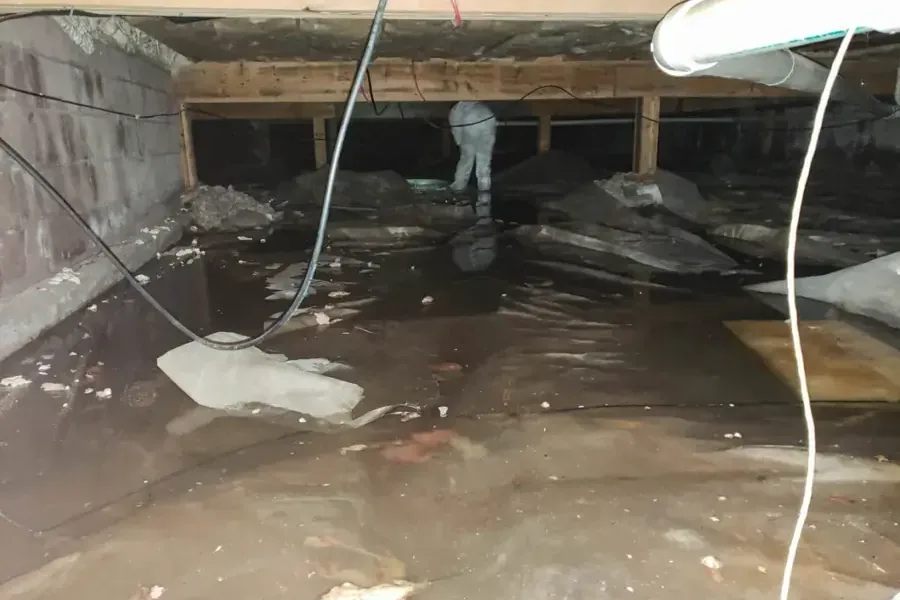
Many older Mableton ranch homes sit on vented crawl spaces where water pools out of sight. The extraction crew pumps it off the vapor barrier, pulls wet insulation and dries the joists and subfloor.
Get the water under the house pumped outOpen 24/7: (888) 532-4616
First steps for crawl space water removal in Mableton
Find the source
Check for a running pipe, a leaking water heater or rain pouring in near the foundation.
Shut off the water
Close the main if a supply pipe under the house is leaking.
Stay out of the crawl space
Standing water near wiring and ductwork is a shock risk, so leave it to the crew.
Note soft floors
Mark spongy spots, cupped boards and musty rooms above the crawl space for the tech.
What does crawl space water removal cost in Mableton, GA?
Crawl space water removal here typically runs $1,000 to $6,500, depending on how much water was standing and how much insulation and barrier came out. The water category, square footage, material class and how fast drying started move the number most.
Pump-out, clean water
$1,000 to $2,500- Standing water pumped
- Barrier checked
- Dehumidifier set
Insulation removed
$2,500 to $4,500- Wet batts pulled
- Joist and subfloor drying
- Daily readings
Drain pipe or flood water
$4,000 to $6,500- Category 3 handling
- Barrier replaced
- Antimicrobial applied
These are typical ranges, not a quote. The water category, the square footage, the material class and how fast drying started move the number most. The water damage cost calculator gives a planning range.
What a complete crawl space water removal job includes
The order of the work is what separates a finished dry-out from a cosmetic one.
Dispatch around the clock
The response team works 24/7 and sends the nearest available crew with pumps, meters and drying gear on the truck.
Measured to IICRC S500
Moisture mapping comes first, and the equipment stays until readings match a dry reference, not until a room looks dry.
A claim file built daily
Most crews log moisture readings every day and take timestamped photos before anything is cut out, so the file matches the loss.
Built for clay, creeks and crawlspaces
Daylight basements, crawlspaces under postwar ranches and creek-side lots are everyday work for local restoration pros.
Houses from the 1950s to the 1970s across south Cobb often sit on vented crawl spaces two to three feet high. Supply and drain pipes run through that space, the ground under it is red clay, and nobody looks in there for months. Water can sit on the vapor barrier for weeks before a soft floor or a musty room gives it away.
Where crawl space water comes from
- A supply or drain pipe that cracked, often after a hard freeze
- Rain running toward the foundation from gutters and sloped yards
- A water heater or HVAC condensate pan leaking into the space
- Seepage through the foundation wall after days of rain
Soft floors or a musty smell over the crawl space? The crew checks it and pumps it out.
Send a crew under the houseWhat the extraction crew does under the house
The crew pumps standing water off the vapor barrier, then checks the barrier itself: torn or flooded plastic is pulled and replaced after drying. Fiberglass batts between the joists that soaked up water sag and hold moisture against the wood, so they come out. Joists, sill plates and the subfloor are read with a pin meter, and dehumidifiers and air movers run until they reach a dry reference. Water from a broken drain pipe is handled as sewage backup cleanup.
Why crawl space humidity matters after the pump-out
Humid Georgia summers keep crawl space air damp even after the standing water is gone, and wet wood left in that air can start growing mold within 24 to 48 hours. That is why drying continues until readings say dry, and why the drying team checks the vents and the barrier before leaving. Pipes that split in a cold snap are covered on the frozen pipe water damage page.
Outside references: Ready.gov flood safety and FloodSmart, the National Flood Insurance Program.
How crawl space water removal is handled, start to finish
- 01
Pump out
Remove standing water from the barrier.
- 02
Strip
Pull wet insulation and torn plastic.
- 03
Dry the framing
Dehumidify the joists, sills and subfloor.
- 04
Verify and reseal
Read dry, then restore the barrier.
Crawl space water removal across Mableton and south Cobb
Coverage runs across ZIP 30126, from the older streets off Floyd Road out along Veterans Memorial Highway and South Gordon Road, down to the homes near Nickajack Creek and the Chattahoochee River side.
Nearby coverage reaches Austell, Smyrna, Vinings, Powder Springs, Lithia Springs, Marietta, Atlanta, Kennesaw.
Crawl Space Water Removal questions, answered
How do I know there is water in the crawl space?
Soft or cupping floors, a musty smell in the rooms above, higher indoor humidity and a water bill that jumped are common signs. A look through the access hatch with a flashlight usually settles it.
Can a crawl space be left to dry out on its own?
In a humid Georgia summer it rarely dries well on its own. Wet insulation and damp joists can stay wet for weeks, which is why dehumidifiers and air movers run until readings say dry.
Does the vapor barrier have to be replaced?
Torn or heavily soiled plastic, or any barrier touched by sewage, is replaced after drying. An intact barrier with clean water on top can often be cleaned, dried and kept.
Is crawl space water damage covered by insurance?
Water from a sudden pipe break is often covered after the deductible. Seepage and rain water from outside usually are not. Coverage depends on your policy, so check with your own insurer.
How long does crawl space drying take?
Three to seven days is typical. Heavier soaking of the joists and subfloor, or a space with poor airflow, takes longer, and equipment stays until readings match a dry reference.
Water sitting under the floor?
The extraction crew pumps the crawl space, pulls wet insulation and dries the joists and subfloor.