
Water that comes in from a creek or storm runoff carries silt, sewage and chemicals along with it, so a Mableton house that takes it on needs a different response than one with a leaking pipe. The choices made in the first hours decide how much of the house can be kept.
Key takeaways
- Creek and runoff water is treated as contaminated (Category 3), so soaked carpet, pad and drywall usually come out instead of drying in place.
- Stay out of standing water until the power is off from a dry spot and the water has stopped rising.
- Photograph the high-water mark and every damaged room before anything is moved.
- Standard homeowner policies often leave out rising water, so ask early about separate flood coverage.
- Extraction comes first, then removal of soaked materials, then drying to a measured goal.
Why creek water is not like a pipe leak
A broken supply pipe puts clean water into a house. A creek or storm runoff puts in whatever the water picked up on the way.
That mix can include silt, fuel, yard chemicals and sewage from overloaded drains. Because of it, restoration crews classify the water as Category 3, the most contaminated class.
The class changes the whole job. Materials that soaked up Category 3 water are usually removed and discarded, and the surfaces that stay are cleaned and disinfected before any drying begins.
Clean water from a supply pipe can sometimes be dried in place. Creek water seldom allows that shortcut.
- Silt and clay that settle into carpet, cabinets and wall cavities.
- Sewage from drains and septic systems that overflow during heavy rain.
- Fuel, oil and lawn chemicals washed off driveways and yards.
- Bacteria that make skin contact and tracked-in mud a health risk.
What the September 2009 rain showed south Cobb homeowners
In September 2009, days of heavy rain fell across west metro Atlanta, with an estimated 10 to 20 inches in places according to the National Weather Service in Peachtree City.
Sweetwater Creek and other south Cobb creeks left their banks. Mableton was not a city then, since it became one in 2023, but the same ground and the same creeks are still there.
The Chattahoochee River runs along the eastern and southern edge of the city, and the local soil is red clay that is dense and slow to drain.
After a heavy rain that clay holds water against foundation walls. A house can take on water even when no creek is in sight.
The first hours after water gets in
Safety comes before saving anything. Water that is moving, rising or touching outlets is not safe to wade through.
Once the water has stopped rising, a short list of actions protects both the people and the claim.
- Turn off electricity only from a dry spot. If the panel sits in a wet area, stay out and ask the electric utility to cut power.
- Keep children and pets out of the water, and wear boots and gloves for any contact.
- Photograph and video the high-water mark, each room and the damaged belongings before moving anything.
- Lift papers, medicines and small valuables to a high dry shelf only if the path is safe.
- Do not run a household vacuum or ceiling fans in a flooded room.
What the extraction team removes first
Extraction is the first real step, and speed matters. The longer flood water sits, the further it wicks into pad, drywall and framing.
Standing water and silt
Truck-mounted and portable pumps pull standing water out of the lowest rooms first. Silt and mud are shoveled or vacuumed up before they dry into a crust.
A crew doing water extraction works room by room and checks the lowest spots again after the pumps stop.
Soaked carpet, pad and drywall
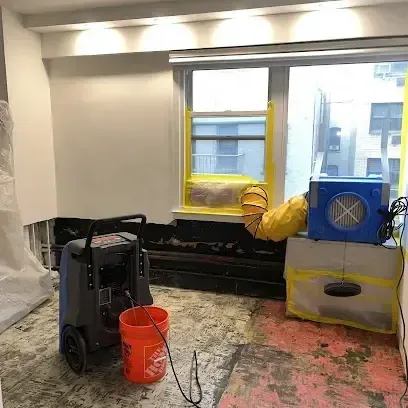
Carpet and pad that sat in Category 3 water are usually cut out and hauled away. Drywall is cut above the visible high-water mark so the wall cavity can be opened and dried.
- Insulation inside a wall cavity is removed when it is wet.
- Baseboards come off so the bottom of each wall can dry.
- Cut edges are kept straight so new drywall can be fitted later.
Hard floors and furniture
Tile and sealed hard floors can often be cleaned and kept. Upholstered furniture and mattresses that sat in flood water seldom can.
How drying follows the cleanup
Once the contaminated materials are out, the structure still holds moisture in framing, subfloor and slab.
The team sets air movers and dehumidifiers, takes readings every day and works toward the IICRC S500 drying goal, a dry reference reading for each material.
Drying is finished by the numbers, not by feel. Readings from the framing are logged until they match the dry standard, and that record supports an insurance claim later.
The structural drying stage usually takes several days, depending on the materials and how deep the water stood. If drains backed up during the flood, the sewage backup cleanup steps apply to those rooms as well.
- Moisture content of framing, subfloor and drywall.
- Air temperature and humidity in each drying zone.
- Equipment placement, which changes as the wet areas shrink.
Flood coverage, cost and facts to have ready
Standard homeowner policies often leave out rising water from a creek or runoff. Separate flood coverage, such as a policy through the National Flood Insurance Program, is its own contract, so it helps to ask the insurer early which one applies.
Printed ranges for storm and flash flood cleanup start at $3,000 to $6,000 for one room or entry. The final figure depends on the depth, the number of rooms and how long the water sat.
The restoration team plans the job around a few facts, so it helps to have them ready.
- Which rooms are wet and roughly how deep the water got.
- Whether the power is off and whether the panel is dry.
- Whether drains or toilets backed up during the flood.
- Photos of the high-water mark and the damaged contents.
- Gate codes or access details for a long driveway.
Questions
Is creek flood water safe to touch?
No. Creek and runoff water can carry sewage, fuel and bacteria, so skin contact should be limited and gloves and boots worn. Anything that touched it is cleaned or removed.
Can carpet soaked by a creek flood be saved?
Usually not. Carpet and pad that sat in Category 3 water are normally removed, because cleaning cannot make a porous material safe again.
Does homeowner insurance cover creek flooding?
Many standard policies exclude flood from rising water, and a separate flood policy covers it. Reading the policy wording right away shows which one applies.
How long does a flooded room take to dry?
Drying commonly takes several days once the contaminated materials are out. The time depends on how deep the water was, what the walls and floors are made of and the daily readings.
Should the power stay on in a flooded house?
Power should be shut off from a dry spot before anyone enters standing water. If the panel is wet, the electric utility handles the shutoff.