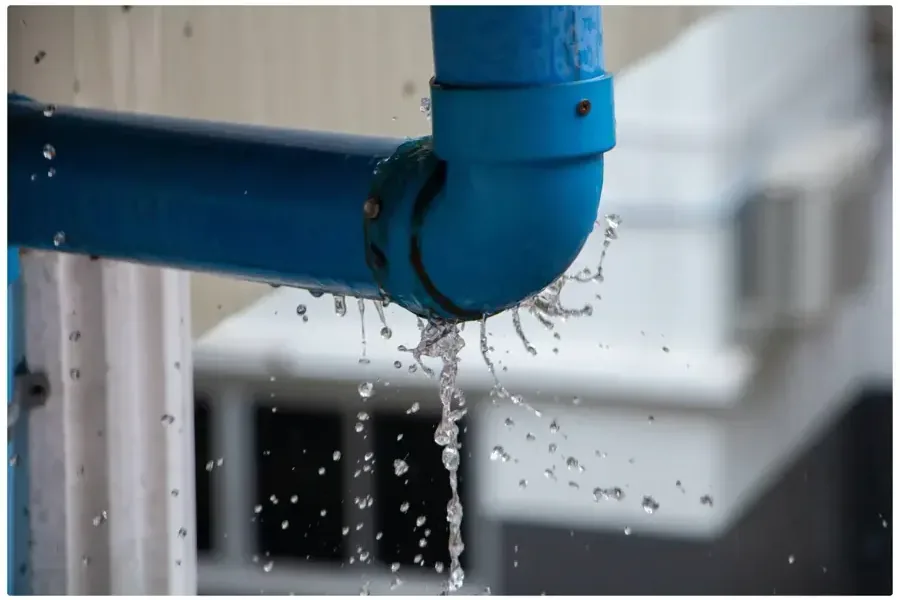
Mableton homes carry several generations of plumbing, and polybutylene is the one plumbers watch most closely. It is a flexible plastic supply pipe, usually gray, that was common in houses built from the late seventies to the mid nineties.
Key takeaways
- Mableton homes mix galvanized steel in the oldest houses, copper in most postwar houses, polybutylene in many homes from the late seventies to the mid nineties and PEX in newer builds.
- Polybutylene tends to fail at the fittings with little warning, so a split can flood a wall cavity before anyone sees it.
- Early signs include damp spots, stains below bathrooms and kitchens, a drop in pressure and a meter that moves with every fixture closed.
- When a pipe splits, shutting off the main valve comes first, then extraction and drying.
- Replacing the supply pipes is a plumber's job, and planning it before a burst avoids the flood.
The supply pipes found in Mableton homes
Plumbing here follows the age of each house. The oldest homes have galvanized steel, most postwar houses have copper and newer builds have PEX.
Polybutylene sits in between. Many homes built from the late seventies to the mid nineties have it, so a house from those years deserves a closer look.
A plumber can confirm the material quickly. It is also visible in many homes if someone knows where to look.
- Under sinks, where the supply pipes meet the shutoff valves.
- Near the water heater, where several pipes meet in one place.
- Where the main pipe enters the house, or along the crawl space ceiling.
- At the meter box or the main shutoff.
Why polybutylene fails
Plumbers commonly link polybutylene failures to the fittings and to chemicals in treated water that wear the plastic from the inside. The pipe can look fine on the outside while it weakens.
That is why failures often come with little warning. A pipe that has run for years can split at a fitting and release water at full pressure.
Water at full pressure can soak a wall, a ceiling and the floor below quickly, especially at night or when no one is home.
A leak at a fitting under a sink is easy to see. The same failure behind a wall is not, which is why the early signs matter.
Warning signs before a pipe lets go
Most splits are preceded by small clues. Catching one of them is usually cheaper than the flood that follows.
- Damp spots or stains on ceilings below bathrooms and kitchens.
- A drop in pressure at one fixture or on one floor.
- A hissing sound or the sound of running water when everything is off.
- Moisture at fittings under sinks or around the water heater.
- A water bill that jumps with no change in use.
- A meter that keeps turning when every fixture is closed.
What a burst looks like inside the house
Where the split happens decides how the water travels and how long it stays hidden.
Inside the wall
A split inside a wall fills the cavity and runs down the studs to the bottom plate. The drywall can look dry on the surface for a while.
In the ceiling below
Water that gets into the floor system travels along the joists and shows later as a stain or a sag in the ceiling below.
In the crawl space
Where supply pipes run through a crawl space, a split sends water onto the vapor barrier and soaks the insulation, so the leak can run unseen for days.
Under a slab
In slab homes the supply pipes can run under the floor, so a split shows up as a warm spot, damp flooring or a sudden jump in the water bill.
The first steps when a pipe splits
The meter test is simple for a suspected leak. Close every fixture, read the meter, wait and read it again, and a moving number means water is leaving the system somewhere.
- Close the main water valve.
- Open a faucet at the lowest point to drain what remains in the pipes.
- Turn off power to wet areas from a dry panel.
- Photograph the damage and keep the failed section of pipe if it can be removed.
- Contact a plumber to stop the leak and a restoration team to extract the water.
Drying the structure after a burst
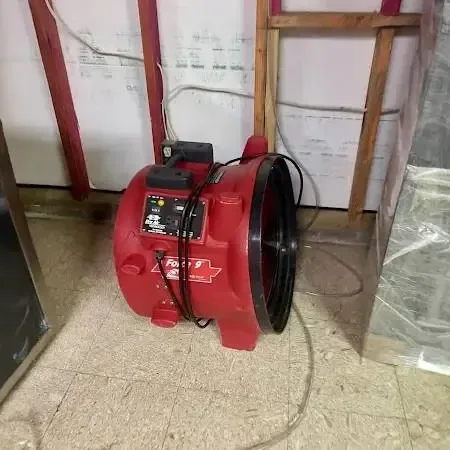
Burst pipe water damage work starts with extraction, since standing water on floors wicks into the wall bottoms and cabinets.
After the water is out, the wall, ceiling and floor are measured with moisture meters. Wet insulation and drywall are cut out, and the framing is dried with air movers and dehumidifiers.
Structural drying continues until the readings sit within a few points of a dry reference. The readings are logged each day and support the insurance claim.
Cost depends on how many rooms are wet. The service page prints $1,200 to $3,000 for one wall or one room and $5,500 to $8,000 for several rooms or levels, and the water damage cost calculator gives a rough estimate.
- Insulation inside the wall cavity.
- Drywall cut above the wet line so the cavity can be dried.
- Baseboards and the bottoms of cabinets that sat in the water.
Replacing supply pipes before a burst
Replacement is a plumbing project, not a restoration one. Many homeowners choose it after a first leak, since the same system can fail again at another fitting.
Hidden leaks under a slab are a related problem in newer slab homes, and the slab leak water damage page covers how those are found.
Some insurers and buyers ask what supply pipe a house has, so knowing the material helps at renewal and at sale.
- A plumber confirms the pipe material at the fixtures and in the crawl space.
- The plan covers the main supply, the branch pipes and the fittings at each fixture.
- Walls or ceilings may be opened in a few places to reach the pipes.
- The repair is scheduled so it does not conflict with the dry-out.
Questions
How can a homeowner tell if a house has polybutylene pipes?
Check the visible supply pipes under sinks and near the water heater, or ask a plumber. Homes built from the late seventies to the mid nineties are the ones to check first.
Does polybutylene always leak?
No. Many systems run for years, but the material tends to fail at fittings with little warning, so the risk rises with age.
Is a burst pipe covered by homeowners insurance?
Sudden pipe failures are often covered, while long-term seepage often is not. The policy wording and the cause decide.
How quickly should water be extracted after a burst?
As soon as the water is shut off. Standing water wicks into drywall, cabinets and flooring, so the sooner it is out, the less has to be removed.
Can a split pipe flood a house when nobody is home?
Yes. A pipe under full pressure keeps running until someone closes the main valve, which is why a meter that moves with everything closed is worth investigating.