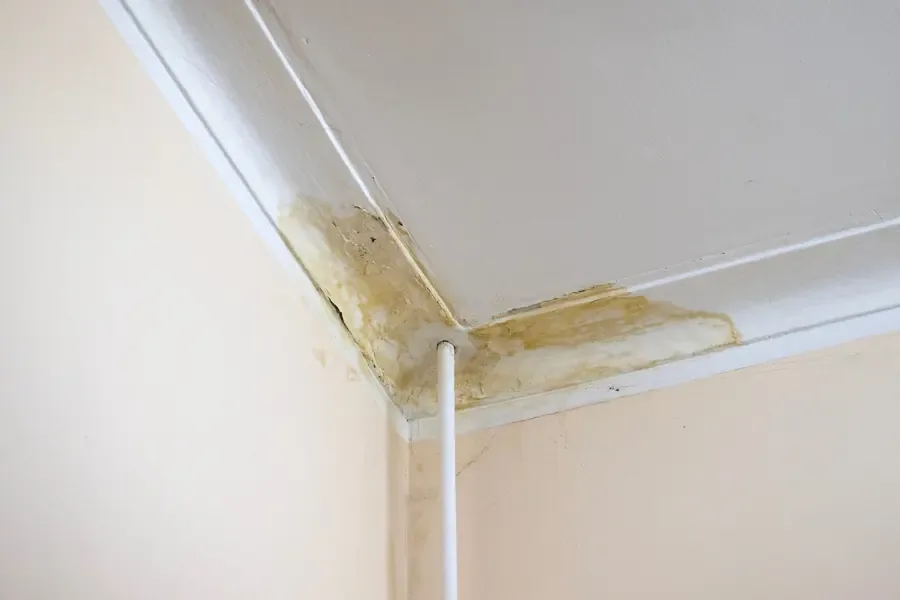
A burst hose or an overflowing tub in an upstairs unit does not stop at the floor. The water travels down through the floor assembly, and the first sign below is often a stain on the ceiling.
Key takeaways
- Stop the source first by closing the valve at the fixture or appliance in the unit above, or the building shutoff if the leak is larger.
- Stay out from under a sagging or bulging ceiling, because it can hold a surprising amount of water.
- Both households should photograph the damage and tell building management right away.
- Water from above often travels along pipes and wiring before it shows, so the stain understates the wet area.
- The ceiling, wall cavities and floor below are dried and measured, not just patched and painted.
How water from an upstairs unit reaches the ceiling below
Water finds the easiest route down. It seeps through gaps around plumbing, runs along joists and wiring and soaks the drywall under the floor.
The first stain often appears near a light fixture, a vent or a wall corner, because those openings give the water a way out.
By the time a brown ring shows, the insulation and drywall above it are usually wet as well.
A slow leak behaves differently from a burst hose. It may show as a faint stain that returns after painting, and by then the insulation above has often been wet for weeks.
- A brown or yellow ring that keeps growing.
- Paint bubbling or peeling near the ceiling.
- Water dripping from a light fixture or smoke detector.
- A ceiling that sags or bulges between joists.
- Damp walls beside the plumbing wall.
Newer mid-rise apartments in College Park
A mixed-use project built in 2017 gave College Park its first mid-rise apartments built after 1969. Buildings like that stack units directly above one another, so one household's leak can reach neighbors below.
This post makes no claim about any specific building, and the same pattern applies to older low-rise apartments and townhomes.
Common sources in stacked housing include appliance hoses, toilet supply leaks and overflowing tubs and sinks. Each one can put a lot of water on a floor before anyone notices.
Older buildings and newer ones differ in construction, but the water path is the same: down the pipe chase, along the joists and out through the ceiling.
Common sources of upstairs leaks
Most upstairs leaks come from a short list of causes, and many of them are preventable.
Replacing old rubber hoses with braided ones and closing the valve before a long trip are small steps that cut the risk.
- Washing machine hoses that bulge, crack or loosen at the connection.
- Dishwasher supply and drain connections under the sink.
- Toilet supply connectors and overflowing bowls.
- Tub and shower overflows or failed seals.
- Water heater tanks in closets.
- Ice maker supply tubing behind the refrigerator.
First steps in the unit with the leak
The household above holds the key to stopping the water. Speed and a clear head matter more than cleanup at this stage.
- Close the valve at the fixture or appliance, or the unit shutoff if there is one.
- If water keeps running, ask building management to close the building shutoff valve.
- Soak up water on hard floors with towels, a mop and a wet vacuum, and leave carpet extraction to the crew.
- Move furniture and electronics away from wet floors.
- Photograph the source, the failed part and the wet floor.
- Tell the unit below right away, even before the cause is clear.
First steps in the unit below
The household below has a different job: limit the damage and keep a record.
A ceiling that has filled with water is dangerous to poke or pull at. The restoration team opens it in a controlled way so the water drains and the debris stays contained.
- Stay out from under a bulging ceiling and keep children and pets away.
- Move belongings out from under drips and cover furniture with plastic.
- Switch off the circuit for a wet light fixture at the panel, and never touch the fixture with wet hands.
- Photograph every stain with the date and add new photos as it spreads.
- Place a bucket under active drips and leave the ceiling alone.
- Notify building management in writing.
How the ceiling, walls and floor are dried
The goal is to find the full path of the water, not just the visible stain.
Opening the ceiling
A ceiling leak water damage job starts by finding how far the water spread. Wet drywall and insulation are cut out in sections, and the joist bays above are opened to the air.
Drying the wall cavities and floors
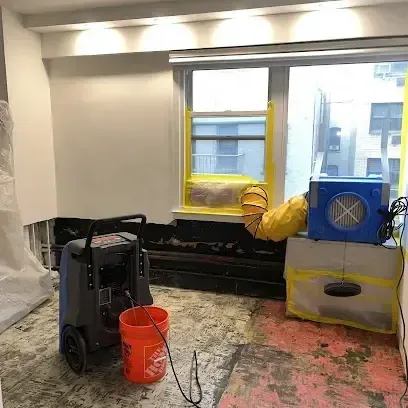
Moisture meters follow the water down the wall and across the floor. Air movers and dehumidifiers are placed where the readings are highest, and the readings are logged until the materials are dry.
If the leak began with a washer hose or a dishwasher, the appliance leak water damage work in the unit above is dried at the same time.
The unit above needs checking too. Water sits under vinyl or laminate planks and in the subfloor, so a few boards are lifted to let the area breathe and to read the moisture underneath.
Talking with management and insurers
In an apartment building, the lease, the owner's policy and any renters policy all play a part in who pays for what. That is a question for the lease, the policy wording and the insurers, not for the restoration crew.
What the crew can provide is evidence: photos, moisture readings and a record of what was removed. Those records matter to every party.
College Park's Building and Inspections department handles plumbing permits, so a repair that opens or replaces plumbing may involve it. For the full list of services, see the College Park water damage restoration pages.
Questions
Who is responsible when a leak from an upstairs apartment damages the unit below?
That depends on the cause, the lease and the insurance policies involved. Photos, dates and the repair record help sort it out.
Is it safe to stay in a unit with a wet ceiling?
A small stain is usually safe, but a bulging or sagging ceiling, a wet light fixture or active dripping near wiring is not. Keep out from under those areas and turn off the circuit if the panel is dry.
Can a ceiling stain be painted over?
Not until the cavity above is dry. Paint hides the stain, but wet drywall and insulation stay wet behind it.
How long does it take to dry a ceiling and wall?
Drying commonly takes several days after the wet materials are removed. The readings, not the calendar, decide when it is done.
Should both households contact the restoration team?
The unit with the leak and the unit with the damage often share one job when the building allows it, since the water path crosses both. Building management usually coordinates access.