Ceiling Leak Water Damage in College Park, GA
A leak in an upper-floor bathroom, a pipe above the ceiling or a roof opening can soak drywall long before it sags. The crew traces the water, opens the wet section and dries the cavity and the room below.
Trace the stain and dry the ceilingOpen 24/7: (888) 532-4616
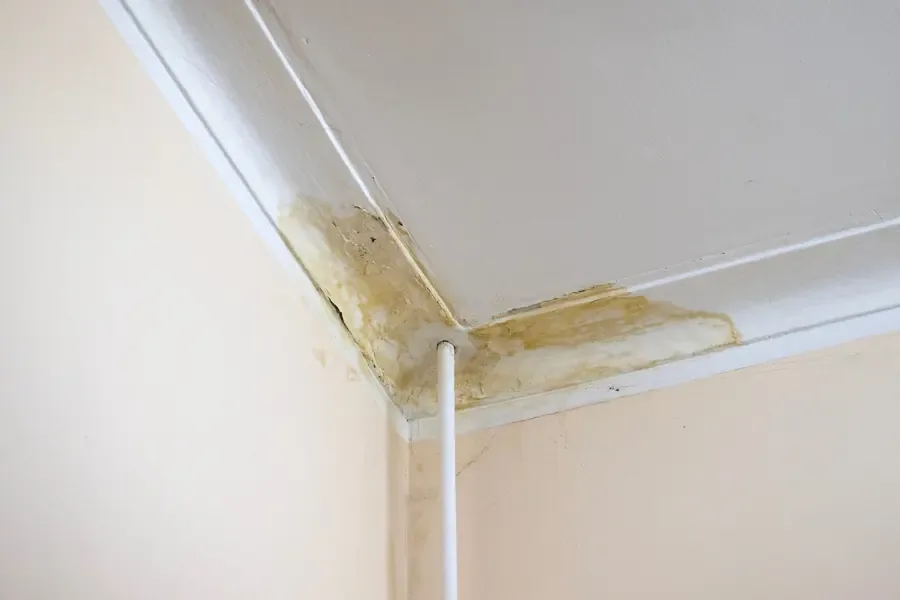
First steps for ceiling leak water damage in College Park
Stop the source
Close the supply valve or ask the tenant above to stop using the fixture.
Protect the room
Move furniture, set a bucket and keep people out from beneath any bulge.
Switch off the fixture
Turn off light fixtures and circuits near the wet ceiling from a dry panel.
Photograph the stain
Take dated photos of the ceiling, the walls and the floor beneath for the claim.
What does ceiling leak water damage cost in College Park, GA?
A stain that can be dried in place often costs $700 to $1,500, a removed ceiling section $1,500 to $3,000, and a loss that also reaches walls and flooring up to $5,000, depending on the area.
Stain dried in place
$700 to $1,500- Source stopped
- Ceiling dried
- Readings logged
Ceiling section removed
$1,500 to $3,000- Drywall cut out
- Insulation checked
- Framing dried
Ceiling, walls and floor
$3,000 to $5,000- Several surfaces wet
- Floor below dried
- Longer dry-down
Ranges only, never a quote: the category of water, the wet square footage, the material class and how soon drying began decide the final number. The water damage cost calculator turns your answers into a planning range.
How a ceiling leak water damage job is run here
Measured drying, steady dispatch and a clean record are what make the job hold up later.
Crews out at any hour
Nights, weekends and holidays, the nearest available crew rolls with extraction units, meters and dehumidifiers.
A dry goal in numbers
Wet materials are read against an unaffected spot in the same building, and the gear stays until the two match.
Records the insurer can follow
Daily readings, a moisture map and dated photos from before any tear-out go into one claim file.
Planned for the building
Older homes, lofts and newer construction dry differently, so equipment is placed to suit the walls and floors in front of the crew.
A ceiling stain is the end of a story that started somewhere above. Water from a roof leak or a pipe travels along joists before it shows, so the wet area is often larger than the stain, and a sagging section can fail without warning.
Apartments and upper floors
A 2017 mixed-use project brought the city its first mid-rise apartments built after 1969, and wherever units are stacked above one another, a leak upstairs can reach the ceiling below. Nothing here describes a particular building. The principle is general: the unit with the stain may not be the unit with the leak, so meters check neighboring ceilings and walls. When a washer or dishwasher is the source, appliance leak water damage explains where that water hides.
Stain growing or drywall sagging? Describe the room and where the water may be coming from.
Name the stained ceilingHow the ceiling is handled
- Water source traced and stopped before any drywall is cut
- Sagging or soft drywall removed in clean, square sections
- Insulation above checked, with wet batts taken out
- Framing and the floor of the room below dried until readings match
Relieving a bulging ceiling
A bulging ceiling can hold gallons. A bucket underneath and a small hole at the lowest point lets it drain in a controlled way instead of dropping a whole section. Photograph the stain, keep people out from underneath and switch off any light fixture near the wet area.
Outside references: EPA WaterSense leak checks and Georgia Office of the Commissioner of Insurance.
How ceiling leak water damage is handled, start to finish
- 01
Trace
Find the source above the stain
- 02
Open
Cut out wet drywall and insulation
- 03
Dry
Cavity, framing and floor dried
- 04
Verify
Readings logged each day until dry
Ceiling leak water damage across College Park and nearby communities
Ceiling leak calls come from homes and upper-floor apartments in Historic College Park, Downtown College Park and Airport City, and from the 30337 and 30349 ZIP codes across the city.
The same service nearby: ceiling leak water damage in Mableton, East Point, Atlanta.
Ceiling Leak Water Damage questions, answered
Where does a ceiling leak come from?
Upstairs plumbing, a roof opening or an appliance above are the usual sources, and the stain often appears away from the actual break.
Can a stained ceiling be dried without cutting it?
If the drywall is only damp and firm, it can be dried in place, but sagging or soft sections are cut out and replaced.
Does a leak in an apartment reach the unit below?
Yes, it can. Water follows the path of least resistance, so neighboring ceilings and walls are checked with meters.
Is a particular building being described?
No claim is made about any specific building. The point is general: water from an upper unit can reach the ceiling below.
How quickly should a wet ceiling be opened?
Quickly, because insulation above holds water against the drywall, and growth can start within 24 to 48 hours.
Will the insurer cover a ceiling leak?
Sudden leaks are often covered after the deductible, so photograph the stain and ask the insurer about the source of the water.
Water coming through the ceiling?
The crew can trace the source, open the wet section and set drying equipment. Call and name the rooms involved.