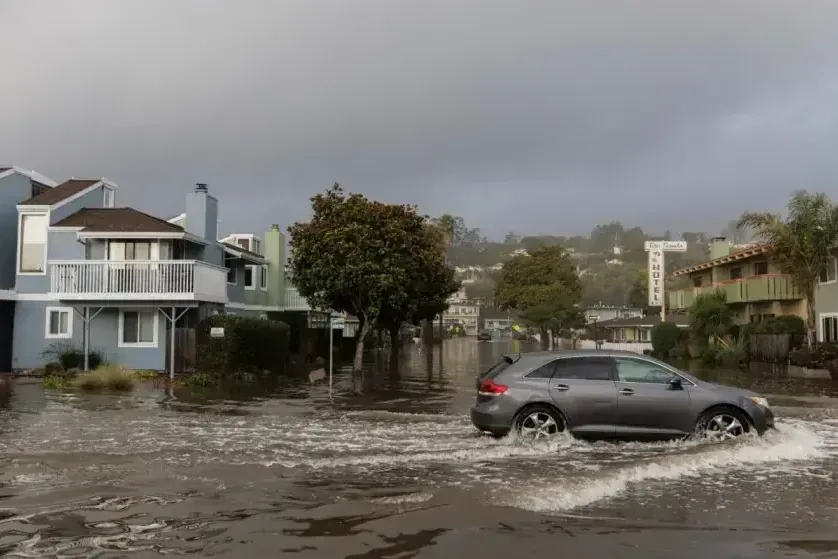
Noonday Creek rises fast when rain stalls over Cobb County, and water that leaves its banks does not always stay in the park. Homes near creeks and low roads face the same pattern, so it helps to know how a rise unfolds.
Key takeaways
- Noonday Creek often floods the fields at Noonday Creek Park in heavy rain, and in September 2009 it blocked Georgia 92 and I-575.
- Creek water is contaminated, so soaked carpet, pad and drywall are removed rather than dried in place.
- Georgia's flood map viewer shows a flood risk snapshot for any address, which is worth checking before the next storm.
- Photograph the high-water mark and the damage before anything is moved.
- Standard homeowner policies often exclude rising water, so ask about flood coverage before the wet season, not after.
How Noonday Creek is fed
Noonday Creek begins near Kennesaw Mountain, is a tributary of the Little River and ends at Lake Allatoona.
Creeks that flow from or through several lakes, including Laura Lake and Chastain Lakes, feed it. After a big rain, all of that water reaches the creek together.
The result is a creek that rises quickly. The fields at Noonday Creek Park flood often in heavy rain.
A creek that rises quickly gives little time to prepare, so the first sign of trouble is often a barricade on a road.
Signs a creek is rising
Warnings usually come before the water does, and a few of them can be seen from a window or a phone.
None of these signs means a house will flood. Together they mean the time to move belongings and photograph the property is now.
- Rain that stalls or repeats over several hours.
- Flash flood warnings for Cobb County in the weather alerts.
- Water standing in a low yard or at the nearest storm drain.
- Barricades going up at low road crossings, as happened at Chastain Road.
- Fast, brown and noisy water in the creek bed.
What the September 2009 rise showed
From September 15 to 22, 2009, prolonged rain caused catastrophic flooding across metro Atlanta, with an estimated 10 to 20 inches in under 24 hours on September 20 and 21.
On September 21, 2009, Noonday Creek rose high enough to block Georgia 92 and I-575 and flood Chastain Road at the creek, which was barricaded.
Statewide, the damage was eventually put at $500 million, with 16,981 residences taking major damage. Those figures cover Georgia, not one city alone.
Later warnings show the pattern repeating.
- On January 4, 2023, flooding closed Noonday Creek Park and a flash flood warning was in effect for Cobb County.
- During Hurricane Helene in September 2024, flood warnings covered most rivers and major creeks in Cobb County, including Noonday Creek.
- In late May 2026, heavy rain flooded more than a dozen Cobb County roads and left 31 trees down on roadways.
Checking flood risk for an address
Georgia's flood map viewer lets owners enter an address to see a property-specific flood risk snapshot, and official FEMA flood maps are on the FEMA Map Service Center.
The Special Flood Hazard Area is the area with a 1% annual chance of flooding, often called the 100-year flood. It is a yearly chance, not a schedule, so two big floods can come in one decade.
If water is already inside, leave the lowest rooms alone and do not drive through flooded roads to reach the house.
- Look up the address in the state flood map viewer.
- Check the official FEMA flood maps for the property.
- Ask the insurer whether the address needs separate flood coverage.
- Note the low spots in the yard and the nearest storm drain.
When creek water reaches a house
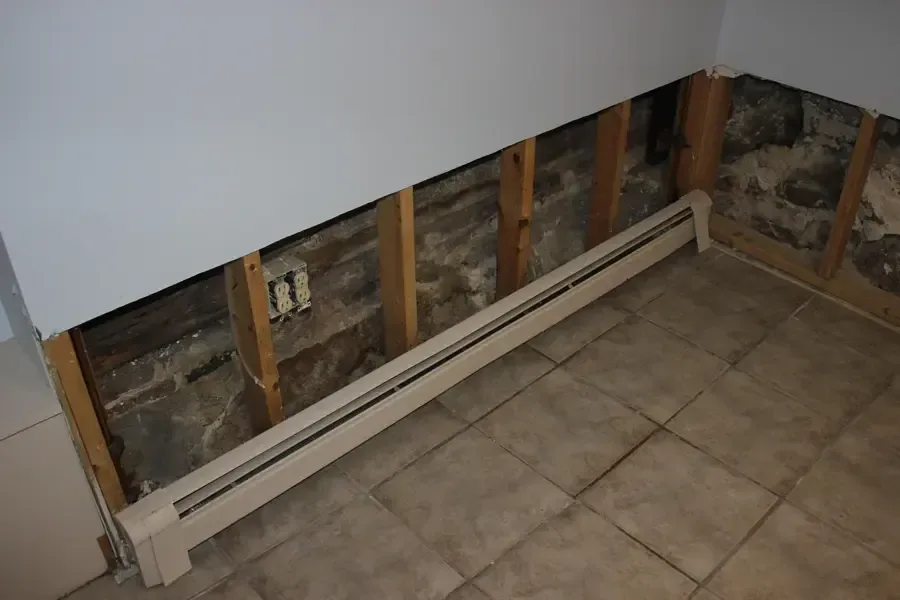
Water that came from a creek is Category 3, which means it is treated as contaminated whatever it looks like. That shapes every step after the first.
- Stay out of moving or rising water and keep children and pets out of any water inside.
- Turn off power from a dry spot, or leave it to the electric utility if the panel is wet.
- Photograph the high-water mark, the rooms and the belongings.
- Do not run household fans or a vacuum through standing water.
- Move small valuables to higher shelves if the path is safe.
Extraction and drying after creek water
The work follows a set order, from water to mud to materials to moisture.
Removing the water and mud
Storm and flash flood cleanup starts with pumping and extraction, then shoveling or vacuuming silt before it dries.
Truck-mounted and portable units pull the water from carpet, pad and floors, and the lowest rooms are done first.
Removing what cannot be dried
Soaked carpet, pad, insulation and the lower part of the drywall are cut out and bagged. Cabinets, trim and hard floors are cleaned and checked for moisture.
- Mattresses and upholstered furniture that sat in the water.
- Insulation and the bottom of the drywall.
- Particleboard cabinets and laminate flooring that swelled.
Drying to a measured goal
Water extraction is followed by air movers and dehumidifiers. Readings from the framing are logged each day until they match the dry reference.
The number of drying days depends on how long the water stood and what the walls and floors are made of.
Getting a property ready before the next storm
Preparation costs little compared with a flooded floor. Most of it takes an afternoon and pays off the first time a warning is issued.
A baseline set of photos of each room also makes a later claim easier to support.
- Move valuables and important papers off the floor in low rooms.
- Clear gutters, downspouts and the storm drain nearest the yard.
- Find the electrical panel and the main water shutoff, and make sure everyone in the house knows where they are.
- Take dated photos of each room and the yard before the wet season.
Insurance, flood coverage and timing
Standard homeowner policies often exclude flood from rising water. Separate flood coverage is its own policy, and many have a waiting period before they begin, so asking before a wet season matters.
Water wicks into pad, drywall and framing the longer it sits, which raises both the cleanup work and the damage. For the services covering the city, see the Kennesaw water damage restoration pages.
Questions
Does Noonday Creek flood?
Yes. The creek often floods the fields at Noonday Creek Park in heavy rain. In September 2009 it also blocked Georgia 92 and I-575 and flooded Chastain Road at the creek.
Is creek flood water inside a house considered contaminated?
Yes. It is treated as Category 3 water, so soaked porous materials such as carpet, pad and drywall are removed and the surfaces that stay are cleaned.
Where can a homeowner check flood risk?
Georgia's flood map viewer gives a snapshot for an address, and the FEMA Map Service Center has the official flood maps.
Does homeowner insurance pay for creek flooding?
Often not. Rising water is commonly excluded, and flood coverage is a separate policy. The policy wording decides.
How soon should drying start after a flood?
As soon as it is safe to enter. The longer water sits, the further it spreads into pad, drywall and framing.