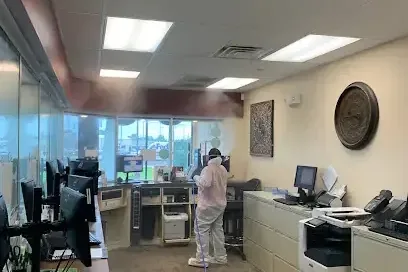
A water main break outside does not flood a building by itself, but the outage and the pressure swings around it can. Managers who know what to check can head off a second loss when service comes back.
Key takeaways
- A street main break is the city's repair, while leaks, open fixtures and failed fittings inside the building are the owner's loss to dry and document.
- Fixtures left open during an outage can flood a floor when pressure returns, so close them before service is restored.
- Walk every floor, restroom and mechanical room when water returns, looking for wet ceilings, floors and pooled water.
- Phased drying keeps part of a building open while the wet area is cleared.
- Keep photos, readings, outage notices and dates, because they support the claim.
What the May 2024 outage showed Atlanta buildings
On May 31, 2024, a break on a 48-inch and 36-inch transmission pipe in Vine City caused water outages and low pressure around downtown Atlanta and a boil water advisory.
A second major main break in Midtown complicated the repairs, and Mayor Andre Dickens declared a state of emergency on June 1, 2024. City officials said water service would return to normal on the morning of June 5, 2024.
The effects reached public buildings. Fulton County offices downtown closed, Zoo Atlanta closed early and Grady canceled elective and non-urgent procedures because of low water pressure.
The city's water department says it may see up to 30 water main breaks and other emergency repairs each month. Smaller breaks happen far more often than a citywide event.
Where the city's repair ends and the building's loss begins
Street mains and transmission pipes belong to the city's watershed department, which handles the repair and the notices. Leaks and possible main breaks are reported to that department's Customer Service.
Inside the property, the story changes. A burst fitting, a flooded restroom or a soaked ceiling is damage to the building, and drying it is the owner's job and often an insurance matter.
Large buildings carry water up risers and through ceilings to many suites at once, so one failed fitting can reach several tenants. That shared plumbing is why a small leak in a mechanical room can become a building-wide problem.
The two overlap in time. A pressure drop outside can cause problems that only show up inside hours or days later.
- Water-stained ceiling tiles on lower floors.
- Pooled water in restrooms, kitchens and break rooms.
- Wet carpet near mechanical rooms and risers.
- Water running in floor drains or sumps that normally stay dry.
Checks before and after pressure returns
Most second losses start with something left open. When the water goes off, nobody closes every tap, and when it comes back, those taps run unattended.
Pressure surges can also split old hoses and fittings. A hose that held for years can fail as soon as normal pressure returns.
- Before service returns, close faucets, hose bibs and any valve that was opened during the outage.
- Have staff walk each floor when pressure returns, restrooms and kitchens first.
- Check ceilings under restrooms, janitor closets and rooftop units for new stains.
- Watch mechanical rooms for leaks at pumps, valves and water heaters as pressure builds.
- Follow the boil water advisory for ice machines, coffee makers and food prep until the city lifts it.
- Restart booster pumps, water heaters and boilers only as the equipment maker's steps allow, and watch them as pressure returns.
- Look at floor drains and sump pumps, which show whether water is moving where it should.
Setting priorities when several suites are wet
When more than one suite is wet, the order of work matters. The crew and the manager decide together which spaces carry the most risk and the most cost if they stay wet.
A quick walk with a moisture meter sorts the building into wet, damp and dry zones, and the plan follows that map.
- Electrical rooms, panels and server or data rooms first, because wet equipment is the costliest loss.
- Food service areas and any space with medical or lab equipment.
- Document storage and inventory rooms, where paper and cardboard soak quickly.
- Lobbies, stairwells and exits that turn slippery and put visitors at risk.
- Tenant suites that are open for business, so the dry-down can be scheduled around them.
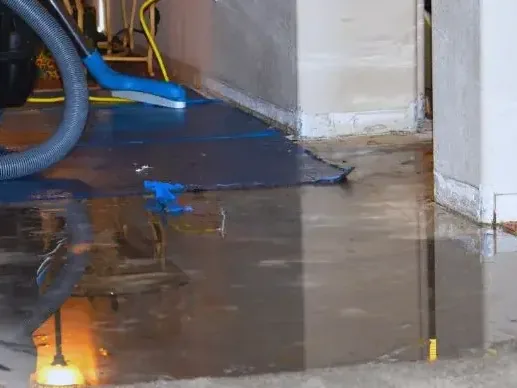
How phased drying keeps doors open
A wet floor does not have to close a whole building. Commercial water damage jobs are usually dried in phases, one area at a time.
Tenant spaces and suites
Each suite is mapped and metered separately, so a dry tenant can stay open while a wet neighbor is cleared. Air movers and dehumidifiers go only where the readings call for them.
Hallways, lobbies and mechanical rooms
Common areas are dried in off hours when possible, with signs and barriers that keep foot traffic away from equipment cords.
Bathrooms and kitchens
Restrooms and kitchens carry the most fixtures, so they are checked first for water under flooring and inside the bottom of walls. Base cabinets and toe kicks are opened when readings show moisture behind them.
Ceilings and risers
Wet ceiling tiles and insulation are removed, and the cavity above is dried before new tiles go up.
Documenting the loss for the claim
Insurers ask for proof of what happened and when, and a main break leaves a public record that helps.
Moisture readings from each phase also let a property manager show when an area was dry and ready to reopen. That record matters to tenants as much as to insurers.
Business interruption coverage, if the policy carries it, has its own conditions. The policy wording is worth reading early.
- Photos of each wet area before cleanup starts.
- The dates of the outage, the boil water advisory and the return of service.
- Moisture readings from the drying crew, logged each day.
- A list of damaged equipment, stock and furnishings.
- Tenant reports, with times, if several suites were affected.
Getting ready for the next break
The city points residents to alert systems such as NotifyATL and ReadyGeorgia. A building manager can use the same alerts to learn about outages early.
A short checklist of valves to close and rooms to walk turns a surprise outage into a routine. Burst pipe water damage is one result of a pressure swing, and the checklist is how it gets caught early.
For a wet building, the Atlanta water damage restoration pages list every service from extraction to structural drying.
Questions
Can a water main break damage a building?
The break itself usually does not, but the outage and the return of pressure can. Open fixtures, failed hoses and old fittings are common sources of a second loss inside.
Who pays for water damage after a city main break?
That depends on the cause of the damage and the policy. Damage inside the building from a burst fitting or an open fixture is generally handled through the building policy, and the outage dates help document it.
Does a boil water advisory mean there is water damage?
No. A boil water advisory concerns drinking water safety. It becomes a restoration matter only if water has also entered the building.
How can a business stay open during drying?
Drying is done in phases. Each area is measured, equipment is placed where the readings call for it and unaffected suites keep operating.
What records help an insurance claim?
Photos, daily moisture readings, outage and advisory dates and a list of damaged contents all help.