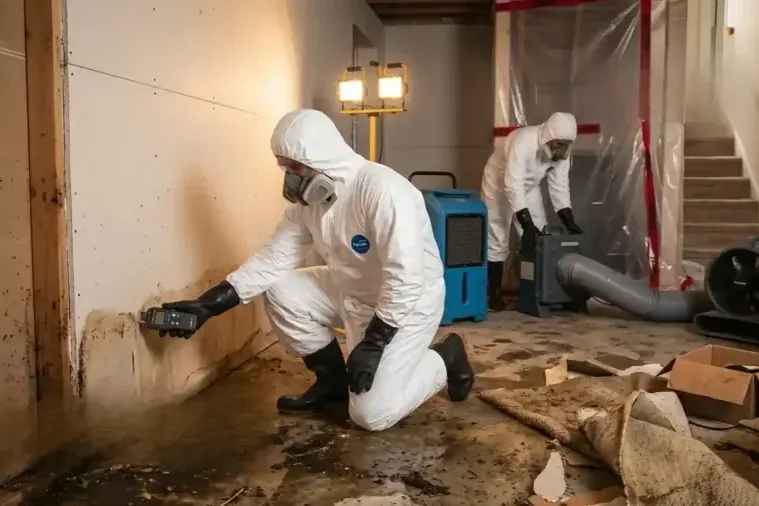
When sewage comes up through a toilet or floor drain, two separate jobs begin. One is the city's job in the public sewer system, and the other is the cleanup inside the house.
Key takeaways
- The city's sewer crews work on overflows and back-ups in the public system, while the cleanup inside the house is its own job.
- Sewage is Category 3 water, so porous materials it touched are removed instead of dried.
- The city says about 85 percent of grease-related sewer blockages start in residential areas, so the kitchen drain is a common cause.
- Groundwater leaking into the sewer system can take up space needed for sewage and push it back toward homes.
- Keep everyone out of the affected rooms and photograph the damage before cleanup starts.
A backup inside the house or an overflow in the street
A backup shows itself at the lowest fixture in a house: a floor drain, a basement toilet or a tub. Water rises, gurgles or smells, and sometimes several fixtures react at once.
When more than one fixture backs up together, the blockage is usually past the house, in the shared sewer. When only one fixture backs up, the clog is often in that branch of the home's own pipes.
A floor drain that bubbles when the washing machine drains points the same way. The water is looking for the lowest exit, and the drain is it.
- Gurgling from a toilet or drain when another fixture drains.
- Water or sewage rising in a floor drain or tub.
- Several fixtures backing up at the same time.
- A sewage smell near a drain, with no visible water yet.
What the city's sewer crews handle
The Water and Sewer Department provides the city's water and wastewater service. Its sewer crews handle 24-hour response to sewer overflows and back-ups and care for 3,400 manholes.
The department also makes site visits to look into flooding, drainage and sewer problems and advise property owners. That advice covers the public side of the problem.
What the city does not do is clean the inside of a house. Removing sewage-soaked flooring and disinfecting the rooms belongs to a restoration team.
Why sewer backups start
Most backups trace to one of a few causes, and the city has named several of them.
Grease from kitchen drains
The city says about 85 percent of grease-related sewer blockages and overflows start in residential areas. Cooking fat poured down a sink cools and hardens inside the pipe.
Businesses face a stricter rule. Hotels, schools, daycares, car washes, automotive maintenance shops, churches and industrial facilities that need grease or oil and water separators must register with Environmental Compliance.
- Wipe greasy pans with a paper towel before washing.
- Pour cooled grease into a container for the trash, not down the sink.
Rain and seepage into the sewer system
The city also says groundwater leaking into the sewer collection system takes up room needed for sewage and can cause overflows and back-ups into streets. Heavy rain makes that worse, and flooding in East Point is most common from June to November.
Major failures in the public system
In September 2025 a collapsed 18-inch concrete sewer trunk pipe released an estimated 18,800 gallons of untreated wastewater into the South River on September 23 and 24. The city said drinking water is not connected to the river.
That was a public system failure, not a backup inside a home, but it shows why the city and the cleanup crew work on different sides of the same problem.
The first steps inside the house
If neighbors have the same symptoms, tell the Water and Sewer Department, because the cause may sit in the public sewer.
- Keep everyone, including pets, out of the affected rooms.
- Stop using sinks, tubs, toilets and washing machines, since they all feed the same drains.
- Skip chemical drain cleaners, which can splash and react.
- Photograph the water, the stained materials and the fixtures before cleanup.
- Turn off power to the affected room from the panel if the panel is dry and the path is safe.
How Category 3 cleanup works
Sewage is Category 3 water, the most contaminated class, and the cleanup follows a set order.
Removal
Carpet, pad, drywall and insulation that sewage touched are cut out and bagged, because porous materials cannot be made safe again.
A team doing sewage backup cleanup wears protective suits, gloves and respirators and keeps the work zone sealed with plastic sheeting.
- Carpet, pad and any soaked rugs.
- Drywall and insulation to above the stain mark.
- Baseboards, trim and the bottom of cabinets that sat in the water.
- Cardboard, paper and stored items on the floor.
Disinfecting and drying
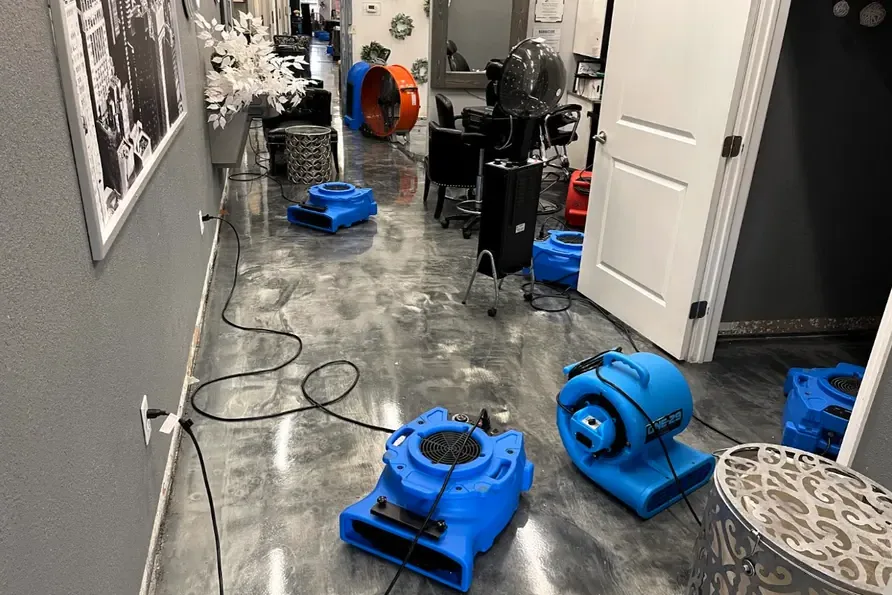
Hard surfaces and framing are cleaned and treated with an antimicrobial before drying. Air movers and dehumidifiers then dry the area while readings are logged.
Water extraction pulls out any standing water first, and the drying continues until the readings match the dry standard.
Records that support an insurance claim
A backup claim is built on records. The restoration team keeps the same kind of notes for every job, and the household adds its own photos.
Many homeowner policies treat sewer backup separately from other water losses, so the exact cause of the water matters.
- Dated photos of the water, the stained materials and the fixtures involved.
- A list of damaged belongings with rough values.
- Notes on when the backup began and who else on the street had the same problem.
- The daily moisture readings and the list of materials removed.
Lowering the chance of a repeat
Among its flood-protection retrofits, the city lists sealing off sewer pipes in the dwelling to prevent sewer backflow. A plumber can say whether that option fits a particular house.
Everyday habits help too: keep grease out of drains, flush only toilet paper and have a slow drain checked before it turns into a backup. For the full set of services, see the East Point water damage restoration pages.
Questions
Who is responsible when sewage backs up into a house?
It depends on where the blockage is. The city's sewer crews work on the public system, and the cleanup inside the house is a separate job for a restoration team. Who owns the pipe between the house and the main is worth confirming with the city or a plumber.
Is a sewage backup covered by homeowners insurance?
Many policies exclude sewer backup unless a rider has been added. The policy wording and the cause of the backup decide it.
Can carpet be saved after a sewage backup?
Usually not. Carpet and pad are porous and are removed after contact with Category 3 water.
What should happen when a floor drain starts gurgling?
Stop running water in the house, keep people out of the area and contact a plumber. If neighbors have the same symptoms, the city's sewer crews should know.
How long does sewage cleanup take?
Removal and disinfecting often happen in the first day or two, and drying afterward takes several days. The readings decide when the job is done.