Water extraction in East Point
Standing water ruins subfloors and baseboards the longer it stays. The extraction crew pulls it out with pumps and wands, then sets up drying equipment to protect what is left.
Start pulling the water outOpen 24/7: (888) 532-4616
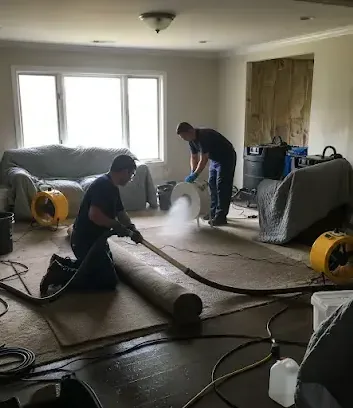
First steps for water extraction and removal in East Point
Stop the inflow
Shut off the supply if a pipe or appliance failed, and keep people and pets out of the wet room.
Move valuables up
Lift small items, cords and papers onto dry shelves before the crew arrives.
Photograph the room
Take photos of the water level and damaged items for the insurance file.
Call for extraction
Describe the depth and the source so the right pumps go on the truck.
What does water extraction and removal cost in East Point, GA?
Extraction costs depend on depth, floor area and whether the water is clean. A single room of clean water is the low end, while contaminated water and larger areas push the price higher, and the cards below show where each type usually lands.
Single room, clean water
$400 to $1,200- One room of floor
- Clean source
- Quick removal
Basement or several rooms
$1,200 to $3,500- More floor area
- Deeper water
- Padding removed
Contaminated water
$3,000 to $6,000- Storm or sewer water
- Materials discarded
- Sanitizing added
Ranges only, never a quote: the category of water, the wet square footage, the material class and how soon drying began decide the final number. The water damage cost calculator turns your answers into a planning range.
How a water extraction and removal job is run here
Measured drying, steady dispatch and a clean record are what make the job hold up later.
Crews out at any hour
Nights, weekends and holidays, the nearest available crew rolls with extraction units, meters and dehumidifiers.
A dry goal in numbers
Wet materials are read against an unaffected spot in the same building, and the gear stays until the two match.
Records the insurer can follow
Daily readings, a moisture map and dated photos from before any tear-out go into one claim file.
Planned for the building
Older homes, lofts and newer construction dry differently, so equipment is placed to suit the walls and floors in front of the crew.
Water that sits on a floor soaks into padding, baseboards and the bottom of the wall within a short stretch. Extraction is the first real task on any wet job, because every later step depends on getting the bulk of the liquid out. Flooding in East Point most commonly occurs from June to November, so storm water arrives as often as a failed pipe does.
How the water comes out
Deep water goes first, through submersible pumps placed at the lowest point of the room. Once the depth drops, extraction wands work across carpet and hard floors, and a weighted tool presses the last moisture out of padding. Where padding is soaked through or the water is not clean, it is cut and hauled out rather than dried in place, because it holds water long after the surface feels dry.
Water is sitting on the floor right now? Describe it to a response team and the pumps get planned.
Describe the waterWhat the crew checks
- Water depth and where it pooled against walls or doors
- Whether the source is clean water or contaminated water
- Moisture readings in baseboards, drywall and subfloors
- Which materials can be saved and which must come out
Why the first hours decide the rest of the job
The city notes that flooding here usually harms the contents of a building more than the building itself, which makes quick removal worth the effort. Rugs, boxes and furniture legs wick moisture upward while water stays on the floor. Once the standing water is gone, air movers and dehumidifiers take over, and the 24 to 48 hour window for mold growth makes it important not to leave anything damp behind.
Outside references: Ready.gov flood safety and Georgia Office of the Commissioner of Insurance.
How water extraction and removal is handled, start to finish
- 01
Assess the water
Depth, source and affected materials are noted first.
- 02
Pump the bulk out
Submersible pumps clear deep water from low spots.
- 03
Wand the surfaces
Extractors lift moisture from carpet, padding and hard floors.
- 04
Hand off to drying
Air movers and dehumidifiers continue the dry out.
Water extraction and removal across East Point and nearby communities
Crews reach homes in Jefferson Park, Colonial Hills and Semmes Park, the Lofts of East Point community, and businesses along Main Street and around Camp Creek Marketplace and Sumner Park.
The same service nearby: water extraction and removal in Mableton, College Park, Atlanta.
Water Extraction and Removal questions, answered
How deep can the water be for extraction to work?
Pumps handle depths from a thin film to several feet. Deeper water simply means pumps run longer before wands and extractors take over.
Does carpet have to be thrown out after water extraction?
Not always. Clean water caught early can often be extracted and dried in place, while carpet soaked with dirty or contaminated water is usually removed.
Is extraction the same as drying a house?
No. Extraction removes liquid water, and structural drying removes the moisture that soaked into wood, drywall and subfloors afterward.
Can extraction start before the source is repaired?
Yes, once the water is shut off or stopped. Clearing the floor first keeps the damage from growing while a plumber works. Most single room jobs finish extraction in one visit.
What if the water came from outside after heavy rain?
Storm water can carry dirt and contaminants, so the crew treats it as unclean, removes affected materials and sanitizes the area.
Will extraction be enough on its own?
Rarely. Without drying equipment, damp framing and subfloors can hold moisture and lead to warped floors and mold, so extraction and drying are planned together.
Get the water moved out
A short call about depth, source and affected rooms lets the extraction crew load the right equipment.