Ceiling leak water damage in Brookhaven
A leak from above stains the ceiling, soaks the insulation and drips onto floors below. Crews contain the water, open the sagging section and dry the ceiling, walls and flooring before damage spreads further.
Report a dripping ceilingOpen 24/7: (888) 532-4616
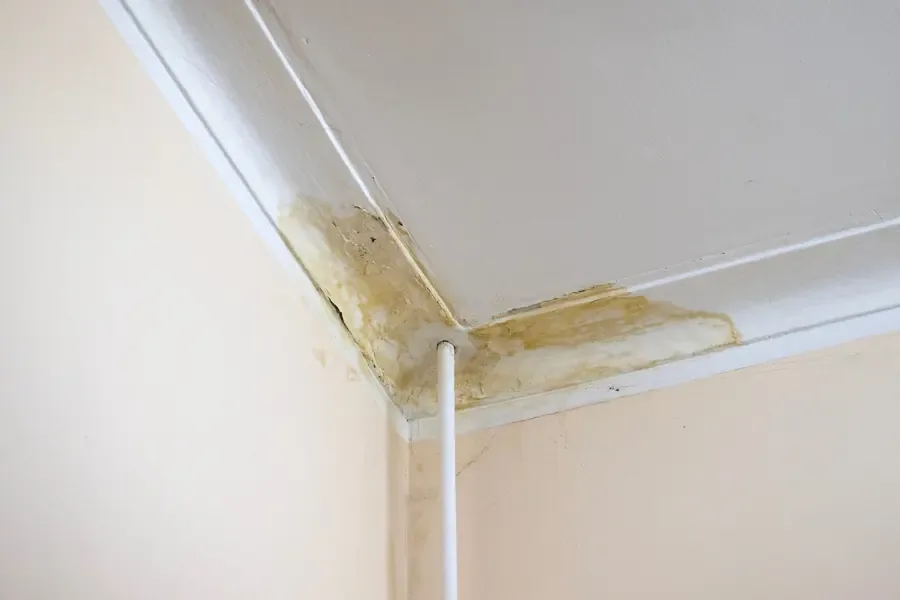
First steps for ceiling leak water damage in Brookhaven
Keep clear of the stain
Move people and furniture away from a bulging or sagging ceiling.
Catch the water
Place containers under drips and lay towels to protect flooring.
Find the source if safe
Shut the supply for the bathroom or appliance above, or alert the neighbor or manager.
Call before it falls
A heavy ceiling can drop without warning, so describe the sag when you call.
What does ceiling leak water damage cost in Brookhaven, GA?
Ceiling leak cost depends on how large the wet section is and whether water reached the walls and flooring. A stain that can dry in place costs far less than an opened ceiling with damaged flooring below it.
Stain dried in place
$700 to $1,500- Small stain only
- Dried in place
- Readings logged
Ceiling section removed
$1,500 to $3,000- Wet section cut out
- Insulation replaced
- Joists dried
Ceiling, walls and floor
$3,000 to $5,000- Several surfaces wet
- Flooring dried
- Full documentation
Ranges only, never a quote: the category of water, the wet square footage, the material class and how soon drying began decide the final number. The water damage cost calculator turns your answers into a planning range.
How a ceiling leak water damage job is run here
Measured drying, steady dispatch and a clean record are what make the job hold up later.
Crews out at any hour
Nights, weekends and holidays, the nearest available crew rolls with extraction units, meters and dehumidifiers.
A dry goal in numbers
Wet materials are read against an unaffected spot in the same building, and the gear stays until the two match.
Records the insurer can follow
Daily readings, a moisture map and dated photos from before any tear-out go into one claim file.
Planned for the building
Older homes, lofts and newer construction dry differently, so equipment is placed to suit the walls and floors in front of the crew.
Ceiling leaks are common in multi story buildings, and the mixed use areas near Brookhaven Village and Town Brookhaven, which has more than 1,500 residential units, show why. A leak in one unit can drip through the ceiling of the unit below, so the first question is always where the water started and where it went.
Why a stain is only part of the story
A brown ring marks where water reached the surface, not where it traveled. Insulation above can hold water for days, drywall can sag under its weight and wiring in the cavity may be wet. The crew checks the ceiling with a meter and cuts a controlled opening so trapped water drains safely instead of letting the whole sheet collapse.
Ceiling stained, bulging or dripping? Describe it and the crew plans containment, opening and drying.
Describe the ceilingTypical sources of a leak from above
- An upstairs bathroom, tub or toilet supply
- A roof opening after heavy rain
- A neighbor's appliance in a shared building
- A split pipe running through the floor above
Drying and restoring the area
Once the wet section is out, air movers and dehumidifiers dry the joists, walls and flooring. Photos and readings record the loss for the insurer or the property manager, and the finished surface can be rebuilt after the framing reads dry. In shared buildings the crew also tells the manager so the source unit can be checked. Related pages include roof leak water damage and the city hub.
Outside references: EPA WaterSense leak checks and Georgia Office of the Commissioner of Insurance.
How ceiling leak water damage is handled, start to finish
- 01
Contain
Protect floors and furniture below.
- 02
Open the ceiling
Release trapped water and remove wet insulation.
- 03
Dry the cavity
Use air movers and dehumidifiers.
- 04
Document
Record photos and readings.
Ceiling leak water damage across Brookhaven and nearby communities
Ceiling leak calls come from upper floor units around Dresden Drive and Peachtree Road, mixed use blocks, and houses in Ashford Park, Drew Valley, Lynwood Park and LaVista Park.
The same service nearby: ceiling leak water damage in Mableton, Atlanta, East Point.
Ceiling Leak Water Damage questions, answered
How can the source of a ceiling leak be found?
The stain may sit far from the source because water travels along joists. A meter, a look in the attic or the unit above and the plumbing layout usually pinpoint it.
Is a sagging ceiling dangerous?
It can be. Trapped water adds weight and the drywall may fall, so keep people out of the room and let the crew open it in a controlled way.
What if the leak comes from a neighbor?
In shared buildings the property manager should be told. The crew documents damage in your unit and can coordinate with the cleanup next door.
Does the whole ceiling need replacing?
Not always. Often only the wet section comes out, sized to the moisture reading rather than the visible stain.
Will the insulation above be replaced?
Wet insulation is usually removed because it dries slowly and holds moisture against the drywall. New insulation goes in after the framing is dry.
How is the work documented?
The crew photographs the stain, the opening and the readings on each visit so the insurer or manager has a complete record.
A sag needs attention early
Tell the response team how large the stain is and what sits above it, and the drying crew prepares tools, meters and air movers.