Ceiling leak water damage in East Point
A stain on the ceiling is only the visible end of a leak above it. The mitigation team opens the area, removes saturated drywall and insulation, and dries the joists and the room below.
Open and dry the ceilingOpen 24/7: (888) 532-4616
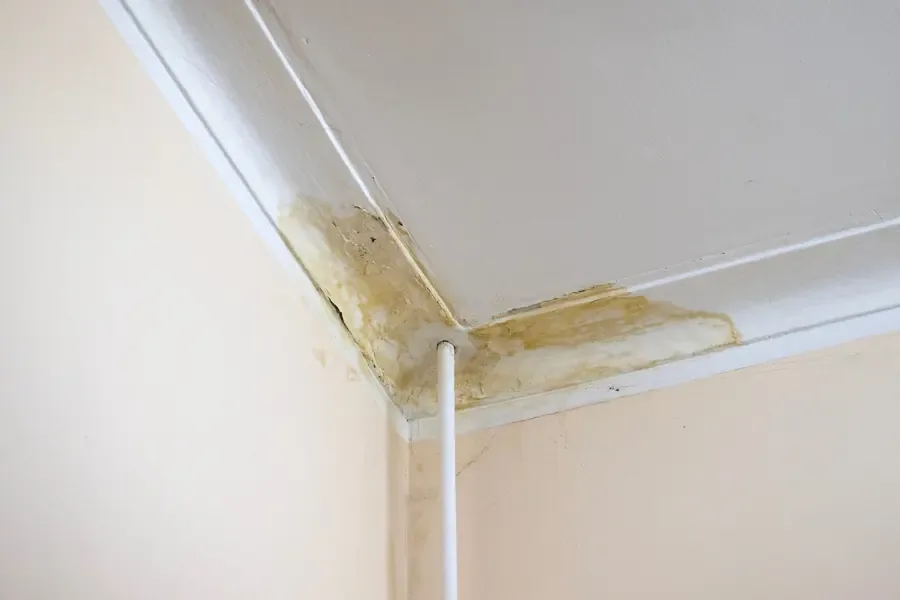
First steps for ceiling leak water damage in East Point
Catch the drip
Place a container under the leak and move furniture out of the way.
Watch for sagging
Stay clear of a bulging ceiling and keep people out of the room.
Switch off fixtures
Turn off ceiling lights on the wet circuit until the area is checked.
Call a drying team
Tell the crew what sits above the stain, such as a bathroom or the attic.
What does ceiling leak water damage cost in East Point, GA?
Ceiling leak cost depends on how much comes down. A stain dried in place is cheapest, a removed section costs more, and walls and floors involved push it higher. Water that reached walls or floors adds to the total.
Stain dried in place
$700 to $1,500- Small area
- Spot drying
- Short monitoring
Ceiling section removed
$1,500 to $3,000- Drywall cut out
- Insulation bagged
- Joists dried
Ceiling, walls and floor
$3,000 to $5,000- Multiple surfaces
- More equipment
- Longer drying
Ranges only, never a quote: the category of water, the wet square footage, the material class and how soon drying began decide the final number. The water damage cost calculator turns your answers into a planning range.
How a ceiling leak water damage job is run here
Measured drying, steady dispatch and a clean record are what make the job hold up later.
Crews out at any hour
Nights, weekends and holidays, the nearest available crew rolls with extraction units, meters and dehumidifiers.
A dry goal in numbers
Wet materials are read against an unaffected spot in the same building, and the gear stays until the two match.
Records the insurer can follow
Daily readings, a moisture map and dated photos from before any tear-out go into one claim file.
Planned for the building
Older homes, lofts and newer construction dry differently, so equipment is placed to suit the walls and floors in front of the crew.
Ceiling leaks come from two directions: water entering from the roof, or water escaping from a pipe, drain or fixture above. In the older bungalows and cottages around downtown and in the Jefferson Park homes from the 1920s to the 1960s, both are common because roofs and plumbing have had time to wear.
Finding where the water begins
The stain rarely sits under the failure. Water travels along joists before it drops, so the crew follows moisture readings across the ceiling and into the room above. A bathroom, a laundry or an attic can all be the true source, and the repair depends on which one it is.
Brown stain or sagging ceiling? Describe it to a response team and the tracing and drying are planned.
Describe the ceilingTypical steps on a ceiling job
- Locating wet areas with a meter and thermal camera
- Cutting out sagging or stained drywall along a straight edge
- Removing wet insulation from the cavity above
- Drying the joists before the ceiling is closed
Why stained drywall should not just be painted
Paint hides a stain but not the moisture beneath it. Damp drywall can sag, and the 24 to 48 hour window for mold growth applies in a cavity that stays wet. Opening the ceiling and drying it lets the repair crew rebuild on sound material. Insurance paperwork also goes better with photos taken before the ceiling is opened.
Outside references: EPA WaterSense leak checks and Georgia Office of the Commissioner of Insurance.
How ceiling leak water damage is handled, start to finish
- 01
Trace the moisture
Meters follow the water to the source.
- 02
Open the ceiling
Wet drywall comes out.
- 03
Dry the cavity
Fans and dehumidifiers run on joists.
- 04
Confirm dry
Readings are logged before closing.
Ceiling leak water damage across East Point and nearby communities
Ceiling leak calls reach the bungalows near downtown, Jefferson Park, Center Park, Historic Conley Hills and the Villages of East Point, plus homes near Marion Park and River Walk.
The same service nearby: ceiling leak water damage in Mableton, College Park, Atlanta.
Ceiling Leak Water Damage questions, answered
What causes a ceiling to stain brown?
Water collects dust and building materials as it passes through insulation and drywall, leaving a brown ring. Stains often grow darker after each new round of rain or use of the fixture.
Can a ceiling stain be painted over?
Not safely until the source is fixed and the area is dry, since trapped moisture can ruin new paint.
Is a sagging ceiling an emergency?
It can be, because trapped water may let go suddenly, so keep clear and call for help.
How can the source be found?
Moisture readings and a thermal camera trace water across the ceiling and into the room or attic above.
Does insurance cover a ceiling leak?
Many policies cover sudden leaks, though terms differ, so photos, dates and moisture logs are useful.
How long does a ceiling take to dry?
Often a few days, depending on the amount of insulation and how much framing the water reached.
Open and dry the wet ceiling
A few details about what sits above the stain help the crew bring the right tools.