Ceiling leak water damage in Atlanta
A brown stain or a sagging panel means water has already collected above the ceiling. The team finds the source, relieves trapped water safely, removes what is soaked and dries the framing, walls and floor beneath.
Get a ceiling leak inspectionOpen 24/7: (888) 532-4616
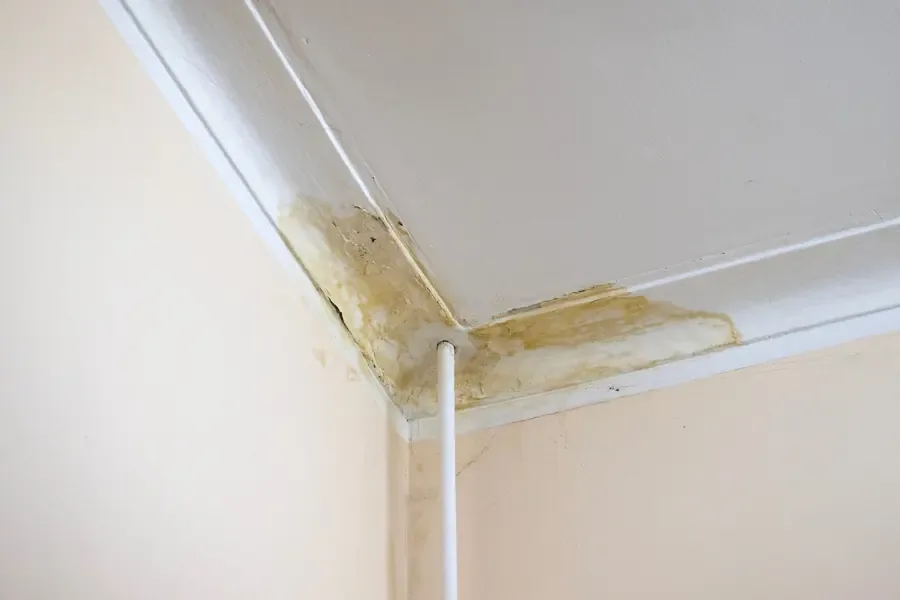
First steps for ceiling leak water damage in Atlanta
Keep clear of the ceiling
Move furniture, switch off fixtures below the stain and avoid standing under a bulge.
Call about the stain
Say where it started, how large it is and whether a unit or the roof sits above.
Release and remove
Trapped water drains into a container, then soaked ceiling material is cut out.
Dry and verify
Equipment dries framing, walls and floor until readings match dry reference points.
What does ceiling leak water damage cost in Atlanta, GA?
Ceiling leak cost in Atlanta depends on whether the stain dries in place or the ceiling has to come down. Damage that reaches walls and the floor below costs the most. Fixing the source is a separate job.
Stain dried in place
$700 to $1,500- Moisture mapping
- In place drying
- Reading check
Ceiling section removed
$1,500 to $3,000- Trapped water released
- Soaked drywall removed
- Joist drying
Ceiling, walls and floor
$3,000 to $5,000- Wall and floor drying
- Insulation removal
- Daily readings
Ranges only, never a quote: the category of water, the wet square footage, the material class and how soon drying began decide the final number. The water damage cost calculator turns your answers into a planning range.
How a ceiling leak water damage job is run here
Measured drying, steady dispatch and a clean record are what make the job hold up later.
Crews out at any hour
Nights, weekends and holidays, the nearest available crew rolls with extraction units, meters and dehumidifiers.
A dry goal in numbers
Wet materials are read against an unaffected spot in the same building, and the gear stays until the two match.
Records the insurer can follow
Daily readings, a moisture map and dated photos from before any tear-out go into one claim file.
Planned for the building
Older homes, lofts and newer construction dry differently, so equipment is placed to suit the walls and floors in front of the crew.
Atlanta homes range from craftsman bungalows to former warehouses in West Midtown that were converted into housing. The leak behind the ceiling depends on the building: a bungalow usually points to the roof or an attic pipe, while a converted unit may be getting water from the floor above. Finding which one it is decides where the drying has to start.
Why ceiling water is risky
Water trapped above a ceiling pools in the insulation and drywall until the weight makes it sag. A bulging panel can release a sudden rush of water, so the team punctures it in a controlled spot to let the water drain into a container. After that the wet section is cut out and the framing above is checked.
Questions about the stain, the source or what has to be cut out? Ask the drying team.
Check on a sagging panelWork on a ceiling job
- Finding the source with a moisture meter and thermal imaging
- Removing soaked drywall and insulation
- Drying joists, walls and the floor below
- Recording photos and readings for the claim
Is it the roof or the floor above?
A roof leak usually leaves a stain that spreads with each storm, while a unit above produces water on demand from a bath, kitchen or appliance. Roof causes follow the steps in roof leak water damage. A supply or drain source above is handled through the same drying plan, and the town service hub lists related work.
Outside references: EPA WaterSense leak checks and Georgia Office of the Commissioner of Insurance.
How ceiling leak water damage is handled, start to finish
- 01
Find the source
Meters trace water above the ceiling.
- 02
Drain and cut
Trapped water is released safely.
- 03
Dry above and below
Equipment reaches framing and floor.
- 04
Check readings
Meters confirm dry material.
Ceiling leak water damage across Atlanta and nearby communities
Ceiling leak calls come from Inman Park, Old Fourth Ward, West Midtown, Midtown, Downtown, Buckhead, Collier Heights, Cascade Heights, West End and the converted housing along the Atlanta Beltline.
The same service nearby: ceiling leak water damage in Mableton, East Point, Brookhaven.
Ceiling Leak Water Damage questions, answered
How can the source of a ceiling leak be found?
A moisture meter and thermal imaging trace the wet path, and the timing helps. Stains that grow after rain point to the roof, while stains that appear on demand point to plumbing above.
Is it safe to poke a bulging ceiling?
It should be done in a controlled spot, with a container below and the room cleared. The release avoids a sudden collapse of the whole panel.
Can a ceiling stain be dried instead of replaced?
A small stain on sound drywall can sometimes be dried in place if readings drop. If the panel is soft, sagging or bulging, it is cut out.
What if the water came from the unit above?
The source above must be stopped first. Then the ceiling below is opened and dried, and photos plus readings help sort out which policy applies.
Does a ceiling leak damage the floor too?
Water that drops through the ceiling lands on the floor and can travel under baseboards and into wall bottoms, so floors and walls are checked even when they look dry.
Who repairs the roof or pipe?
A roofer or plumber fixes the source. The restoration team removes and dries what the water reached.
Stains above mean water behind
Tell the team where the stain sits and what is above it, and the crew brings tools to drain, open and dry.