Crawl space water removal in Kennesaw
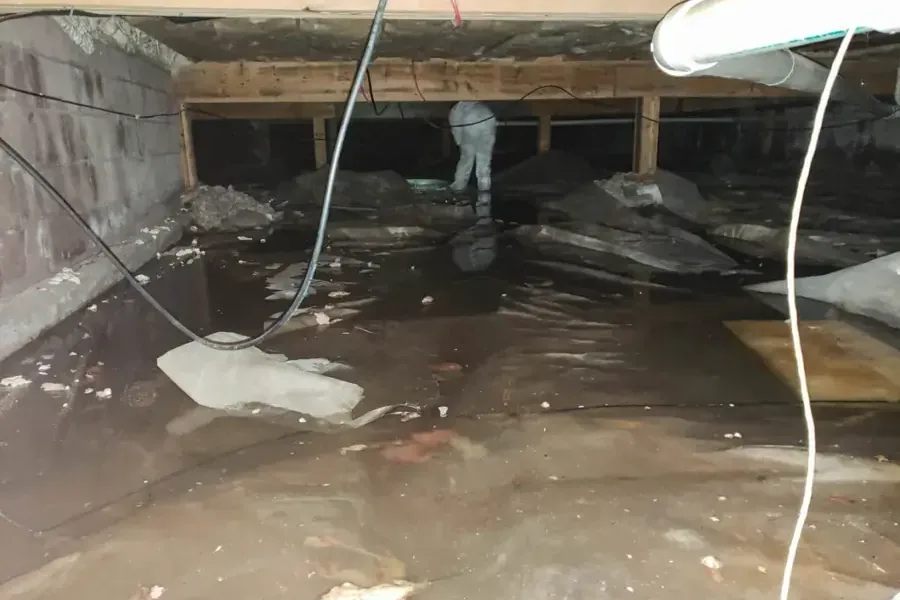
Water under a house is easy to miss until floors feel soft or a damp smell rises. The crew crawls in, pumps the standing water, clears wet insulation and dries the framing overhead.
Call for water under floorsOpen 24/7: (888) 532-4616
First steps for crawl space water removal in Kennesaw
Avoid going in
Do not crawl under the house yourself, since tight space, wet wiring and bad air are real hazards.
Look from the hatch
If you can see water, note how deep it looks and take photos from the access opening.
Stop any pipe leak
Close the main valve if a pipe is dripping, and run no water in the house until the source is known.
Call and report
Describe the access, the smells and the soft floors so the crew arrives ready.
What does crawl space water removal cost in Kennesaw, GA?
A crawl space pump out with clean water often costs $1,000 to $2,500. Removing wet insulation brings it to $2,500 to $4,500, and a failed drain pipe or flood water runs $4,000 to $6,500 because the space needs cleaning as well.
Pump out, clean water
$1,000 to $2,500- Standing water removed
- Barrier checked
- Fans placed
Insulation removed
$2,500 to $4,500- Wet batts bagged
- Joists dried
- Subfloor metered
Drain pipe or flood water
$4,000 to $6,500- Dirty water handled
- Space cleaned
- Longer drying
Ranges only, never a quote: the category of water, the wet square footage, the material class and how soon drying began decide the final number. The water damage cost calculator turns your answers into a planning range.
How a crawl space water removal job is run here
Measured drying, steady dispatch and a clean record are what make the job hold up later.
Crews out at any hour
Nights, weekends and holidays, the nearest available crew rolls with extraction units, meters and dehumidifiers.
A dry goal in numbers
Wet materials are read against an unaffected spot in the same building, and the gear stays until the two match.
Records the insurer can follow
Daily readings, a moisture map and dated photos from before any tear-out go into one claim file.
Planned for the building
Older homes, lofts and newer construction dry differently, so equipment is placed to suit the walls and floors in front of the crew.
Whether a particular house has a crawl space depends on how it was built, so the work starts with a look underneath. When one does hold water, the cause is usually a leak overhead, rain running toward the foundation or a drain pipe that failed. Standing water there cannot evaporate quickly, which is why it lingers and keeps the floors above damp.
Pumping and removing wet insulation
A small pump clears the standing water, and a wet vacuum gets the rest from low spots. Fiberglass or foam batts that sagged into the water are cut away and bagged, since wet insulation stays heavy and damp for a long time. The crew wears coveralls and a respirator in tight spaces and checks the joists and subfloor from below. Dirty water gets the same removal but with extra disposal care.
Water under the house and not sure how bad it is? Describe the access and the smell, and the dispatcher explains what comes next.
Ask about the soggy joistsSigns of trouble underneath
- Floors that feel cold, springy or soft near the walls
- A damp, earthy smell rising through floor vents
- Sagging insulation or torn vapor barrier seen from the hatch
- Pipes or ducts dripping onto the ground below
Drying the space and the floor above
A dehumidifier rated for tight spaces runs in the crawl space while air movers push dry air along the joists. The subfloor is checked with a meter from above and below, and readings decide how long the equipment stays. If a leaking drain pipe fed the water, the plumber's repair comes first, then the drying finishes and the owner gets photos of the cleared space.
Outside references: Ready.gov flood safety and FloodSmart, the National Flood Insurance Program.
How crawl space water removal is handled, start to finish
- 01
Inspect access
Find the water and the source
- 02
Pump out
Small pumps clear standing water
- 03
Remove wet items
Insulation comes out and is bagged
- 04
Dry above and below
Dehumidifier and air movers run
Crawl space water removal across Kennesaw and nearby communities
Crawl space calls come from Downtown Kennesaw, the Chastain Lakes area and the rest of ZIP 30144, wherever a house has an access hatch and water collecting underneath the floor.
The same service nearby: crawl space water removal in Mableton, Brookhaven, Atlanta.
Crawl Space Water Removal questions, answered
Do all houses have a crawl space?
No. It depends on the foundation, which varies from house to house. The crew checks access first, and the dry out plan fits what is actually under the floor.
What causes water to collect under a house?
Common sources are a leaking supply or drain pipe, rain running toward the foundation and an overflowing gutter. Finding the source decides whether the water returns.
Is wet insulation worth saving?
Usually not. Insulation that sagged into water loses its value and holds moisture against the joists, so the crew removes it and new insulation goes in after the space is dry.
Can I just run a fan down there?
A fan alone moves damp air around without removing the moisture. A dehumidifier and a pump do the real work, and the crew uses meters to confirm the wood dries.
Does a wet crawl space damage the floors above?
It can. Moisture rises into joists and subfloor, which can soften wood, loosen flooring and give rooms a musty smell. Drying from below and above protects those layers.
What does the plumber handle?
A plumber repairs a leaking supply or drain pipe. The restoration crew removes the water and wet materials and dries the space once the source is closed.
Clear the water underneath
Water under a house keeps floors damp from below. Call any hour and the crew plans pumps, insulation removal and drying.