Crawl space water removal in Atlanta
Water under a house is out of sight but not out of reach of the floor above. The crew pumps the space, checks insulation and the vapor barrier, and dries the framing so moisture stops rising.
Pump the crawl space nowOpen 24/7: (888) 532-4616
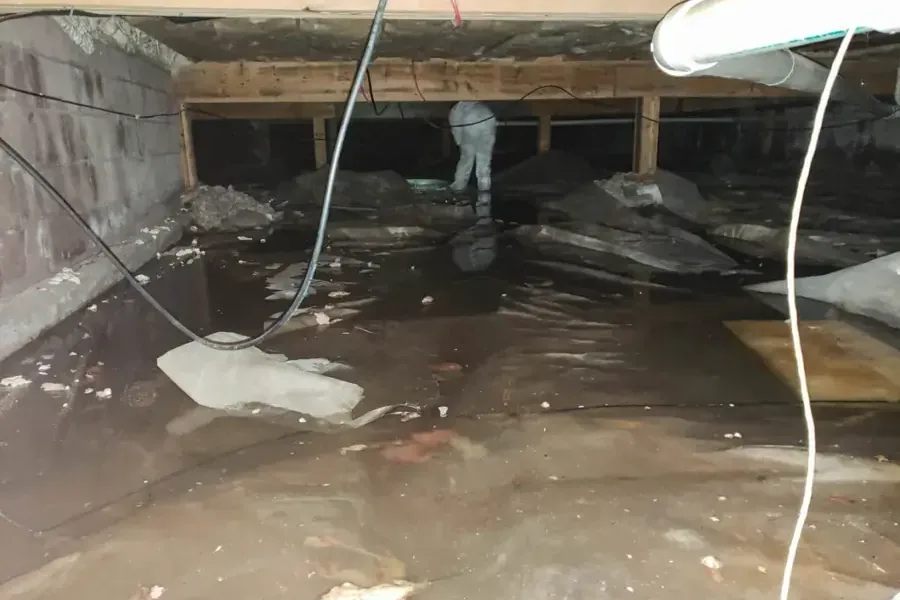
First steps for crawl space water removal in Atlanta
Shut off the source
Close the main valve for a leak and keep out of the space until power is safe.
Describe the access
Share where the hatch or door is, how deep the water stands and what hangs from the joists.
Pump and remove
Pooled water is pumped, wet insulation comes down and the barrier is checked.
Dry under the floor
Equipment runs until joist and subfloor readings are normal.
What does crawl space water removal cost in Atlanta, GA?
Crawl space cost in Atlanta depends on water depth, whether insulation comes out and the kind of water. A clean pump out is the smallest job, and drain pipe or flood water costs the most. Access and space size also matter.
Pump-out, clean water
$1,000 to $2,500- Water pumped out
- Wet vacuum finish
- Barrier check
Insulation removed
$2,500 to $4,500- Soaked batts taken out
- Joist drying
- Barrier inspection
Drain pipe or flood water
$4,000 to $6,500- Protective gear used
- Porous materials removed
- Surfaces cleaned
Ranges only, never a quote: the category of water, the wet square footage, the material class and how soon drying began decide the final number. The water damage cost calculator turns your answers into a planning range.
How a crawl space water removal job is run here
Measured drying, steady dispatch and a clean record are what make the job hold up later.
Crews out at any hour
Nights, weekends and holidays, the nearest available crew rolls with extraction units, meters and dehumidifiers.
A dry goal in numbers
Wet materials are read against an unaffected spot in the same building, and the gear stays until the two match.
Records the insurer can follow
Daily readings, a moisture map and dated photos from before any tear-out go into one claim file.
Planned for the building
Older homes, lofts and newer construction dry differently, so equipment is placed to suit the walls and floors in front of the crew.
Atlanta averages about 50.43 inches of precipitation a year, spread fairly evenly across the seasons, so water can find its way under a house at any time. A burst pipe or a failed drain does the same thing without any rain at all. Either way, the space under the floor is hard to see and slow to dry.
What the crew checks first
Access, footing and electrical hazards are checked before anyone enters the space. Pumps remove the pooled water, and wet vacuums finish the low spots. Insulation hanging between the joists is inspected, since saturated batts pull water against the subfloor and are usually removed. The vapor barrier is checked for tears and pooled sections, and readings on the joists show how far moisture climbed.
Questions about pumping, insulation or drying under the floor? Ask the crew before the moisture spreads.
Ask about water below floorsCommon causes under a house
- Heavy rain and runoff that drains toward the foundation
- A leaking supply or drain pipe under the floor
- Water heater or appliance leaks that soak through the subfloor
- Groundwater that rises after days of wet weather
Drying the floor system
Dehumidifiers and air movers pull moisture from the joists, the subfloor and the underside of the floor above. Tight spaces dry unevenly, so the team repositions equipment as readings change and logs each visit. Floors above are checked for cupping or soft spots as drying proceeds. If a drain pipe was the source, the contamination steps in sewage backup cleanup apply, and the town service hub lists the other water jobs.
Outside references: Ready.gov flood safety and FloodSmart, the National Flood Insurance Program.
How crawl space water removal is handled, start to finish
- 01
Pump out
Pooled water and low spots are cleared.
- 02
Inspect
Insulation and barrier are checked for damage.
- 03
Dry
Dehumidifiers work the joists and subfloor.
- 04
Verify
Readings confirm the space is dry.
Crawl space water removal across Atlanta and nearby communities
Crawl space calls come from Buckhead, Peachtree Battle, Chastain Park, Cascade Heights, Collier Heights, West End, Inman Park, Old Fourth Ward, Riverside and Whittier Mill, plus other older neighborhoods.
The same service nearby: crawl space water removal in Mableton, East Point, Brookhaven.
Crawl Space Water Removal questions, answered
Is standing water under the house a problem?
Yes. It can soak insulation, swell the subfloor and keep humidity high under the floor. The longer it stays, the more of the floor system it reaches.
Does wet insulation have to be replaced?
Insulation that is soaked usually comes out, since it holds water against the subfloor. Batts that only brushed moisture can sometimes stay if readings come back low.
Can a pump alone solve it?
A pump removes the pooled water but not the moisture in wood. Joists and the subfloor need dehumidifiers and air movers, with readings taken until they are dry.
Is it safe to go under the house after a flood?
Not before power is confirmed safe. Standing water, loose wiring and tight access are real hazards, which is why the crew handles the entry and the pumping.
What if a plumbing leak caused the water?
A clean supply leak is pumped and dried like any other. A drain pipe leak carries contamination, so porous materials it touched are removed and surfaces are cleaned.
How is a crawl space inspected for dryness?
Moisture meters read the joists and subfloor, and thermal readings show cool, wet patches. The crew logs those numbers at each visit and compares them with dry reference points.
Water under the floor needs a pump
Tell the team how the space is reached and how deep the water stands, and pumps and dryers are matched to it.