Crawl space water removal in Brookhaven
Water trapped under a floor soaks insulation, framing and the vapor barrier without being seen. Crews pump the space out, remove saturated insulation and dry the wood above it.
Pump out the crawl spaceOpen 24/7: (888) 532-4616
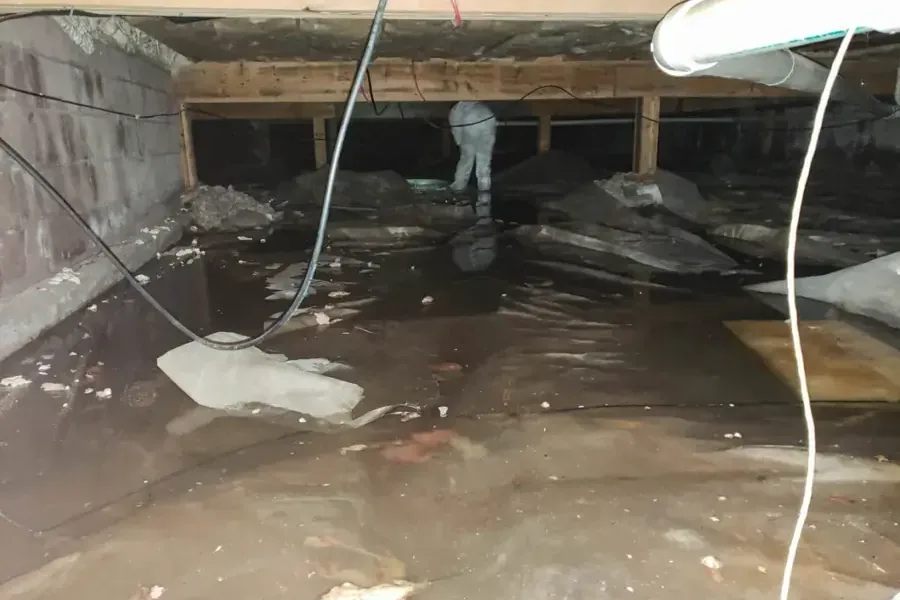
First steps for crawl space water removal in Brookhaven
Find the source
Check whether rain, a leaking pipe or an appliance is feeding the water, and stop it if possible.
Do not crawl in alone
Standing water, wiring and tight spaces make the area unsafe without protective gear.
Check the floor above
Note soft spots, stains or musty smells and photograph them for the insurer.
Call for removal
Describe the access point and how deep the water looks so the crew brings suitable pumps.
What does crawl space water removal cost in Brookhaven, GA?
Crawl space cost depends on the depth of water, how much insulation is wet and whether the source was clean. Pumping alone costs least, and contaminated water adds disposal and cleaning. The cards show the common bands.
Pump-out, clean water
$1,000 to $2,500- Water pumped away
- Barrier checked
- Readings logged
Insulation removed
$2,500 to $4,500- Wet insulation bagged
- Joists dried
- Longer equipment run
Drain pipe or flood water
$4,000 to $6,500- Containment used
- Material discarded
- Disposal and sanitizing
Ranges only, never a quote: the category of water, the wet square footage, the material class and how soon drying began decide the final number. The water damage cost calculator turns your answers into a planning range.
How a crawl space water removal job is run here
Measured drying, steady dispatch and a clean record are what make the job hold up later.
Crews out at any hour
Nights, weekends and holidays, the nearest available crew rolls with extraction units, meters and dehumidifiers.
A dry goal in numbers
Wet materials are read against an unaffected spot in the same building, and the gear stays until the two match.
Records the insurer can follow
Daily readings, a moisture map and dated photos from before any tear-out go into one claim file.
Planned for the building
Older homes, lofts and newer construction dry differently, so equipment is placed to suit the walls and floors in front of the crew.
Not every home has a crawl space, so the advice here covers any property with a space beneath the floor, whatever its age. Water there is easy to miss because nobody looks under the house until a floor feels soft or a smell appears. By then insulation and framing may already be wet.
How water gets under a floor
Rain runoff, a leaking supply pipe, a failed drain or an appliance leak can all send water below the living space. It collects on the vapor barrier or the ground and soaks fiberglass insulation, which then holds moisture against the joists. The crew checks the space, measures moisture in the wood and decides what can stay. Water can also arrive in a thin sheet after a storm, so a space can look nearly dry while the insulation overhead is soaked.
Water under the floor? Describe how it got there and the crew prepares pumps and drying gear.
Describe the crawl spaceWhat the removal process covers
- Pumping standing water to the outside, away from the foundation
- Pulling down insulation that is wet and sagging
- Lifting or drying the vapor barrier where water pooled
- Setting air movers and a dehumidifier to dry joists and subfloor
After the water is gone
Dry framing matters because wood that stays damp invites rot and growth. The crew logs readings on the joists and subfloor until they match dry reference points taken from an unaffected area of the same house. For related work see structural drying or return to the city hub.
Outside references: Ready.gov flood safety and FloodSmart, the National Flood Insurance Program.
How crawl space water removal is handled, start to finish
- 01
Inspect the space
Measure water depth and moisture.
- 02
Pump it out
Drain standing water outside.
- 03
Remove wet insulation
Bag saturated material.
- 04
Dry the framing
Run equipment and take readings.
Crawl space water removal across Brookhaven and nearby communities
Calls for water under floors come from Drew Valley, Lynwood Park, LaVista Park, Lenox Park, Brittany and the streets around Silver Lake, along with properties near Windsor Parkway and Peachtree Road.
The same service nearby: crawl space water removal in Mableton, Atlanta, East Point.
Crawl Space Water Removal questions, answered
How can a wet crawl space be spotted?
Soft or cold floors, a musty smell and sagging insulation visible through the access hatch all point to water below. A moisture meter gives a firm answer.
Does wet insulation have to be replaced?
Usually yes. Fiberglass holds water against the joists and does not dry well in a closed space, so the crew removes it before drying.
Is the water safe to pump outside?
Clean water can be pumped to a spot away from the foundation so it does not run back in. Water from a drain or sewage needs containment and proper disposal.
Will drying stop wood damage?
Prompt drying lowers the risk. Wood that stays wet for long periods can swell or decay, so readings are tracked until the joists are dry.
Can an owner handle it alone?
Small amounts of clean water, yes, with care. Deeper water or confined entry calls for trained crews with protective equipment.
Is insurance involved?
It can be, depending on the source of the water. Photos, notes and a written scope help the insurer assess the loss.
Hidden water still does damage
Share the access point, the likely source and what the floor above feels like, and the team prepares the right pumps and meters.