Roof leak water damage in Atlanta
Rain that gets past a roof soaks insulation and ceilings before anyone sees it. The drying team opens the wet areas, removes what holds water and dries the attic and the rooms below.
Open and dry the atticOpen 24/7: (888) 532-4616
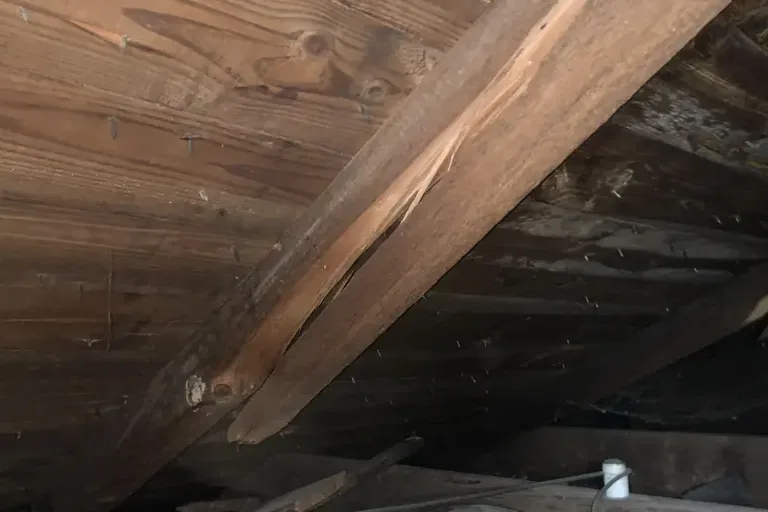
First steps for roof leak water damage in Atlanta
Protect the room
Move furniture, set out containers and avoid touching a bulging ceiling.
Call and describe
Give the stain location, how hard it rained and whether the attic is reachable.
Cover and open
A roofer closes the opening while the crew opens wet ceiling sections and clears insulation.
Dry and recheck
Air movers and dehumidifiers run, and readings in the attic and rooms below are checked.
What does roof leak water damage cost in Atlanta, GA?
Roof leak cost in Atlanta rises with the number of rooms the water reached. A small stain in one room costs the least, and wet attic insulation or several rooms cost more. Roof repair is separate.
Small stain, one room
$800 to $2,000- Stain dried in place
- Moisture readings
- Photos for the claim
Wet attic insulation
$2,000 to $4,000- Insulation removed
- Attic dried
- Ceiling checked
Several rooms
$4,000 to $6,500- Ceiling sections removed
- Walls and floors dried
- Daily readings
Ranges only, never a quote: the category of water, the wet square footage, the material class and how soon drying began decide the final number. The water damage cost calculator turns your answers into a planning range.
How a roof leak water damage job is run here
Measured drying, steady dispatch and a clean record are what make the job hold up later.
Crews out at any hour
Nights, weekends and holidays, the nearest available crew rolls with extraction units, meters and dehumidifiers.
A dry goal in numbers
Wet materials are read against an unaffected spot in the same building, and the gear stays until the two match.
Records the insurer can follow
Daily readings, a moisture map and dated photos from before any tear-out go into one claim file.
Planned for the building
Older homes, lofts and newer construction dry differently, so equipment is placed to suit the walls and floors in front of the crew.
Atlanta averages about 50.43 inches of precipitation a year and has the densest urban tree coverage of any major city in the United States. Rain and trees are a hard combination for a roof, since limbs, leaves and storm winds all test the same shingles and flashing. An EF2 tornado damaged prominent structures downtown on March 14, 2008, although tornadoes are rare in the city itself.
How roof water travels
Roof water rarely drips straight down. It runs along rafters, soaks attic insulation and shows up as a stain a few feet from the opening. The team follows that path with a moisture meter and thermal imaging, then opens the ceiling where readings stay high. Wet insulation is bagged out of the attic, since it traps water against the ceiling below.
Questions about the stain, the attic or what comes out first? Ask the drying team.
Ask where the rain enteredWhat the crew handles
- Tracing the stain back to the wet spot in the attic
- Removing wet insulation and sagging ceiling sections
- Drying rafters, ceiling joists and wall tops
- Documenting the damage with photos for the claim
Roof repair and drying go together
A roofer fixes the opening, and the drying team makes sure the water that already got in does not keep working. Temporary covering buys time after a storm, but wet materials under it still need removal and drying. A leak from a unit or floor above is a ceiling leak and follows a different path, and the town service hub lists the rest of the water jobs handled here.
Outside references: Ready.gov severe weather and Georgia Office of the Commissioner of Insurance.
How roof leak water damage is handled, start to finish
- 01
Trace the water
Meters follow the stain to the source.
- 02
Open the area
Wet ceiling sections come down.
- 03
Dry the attic
Equipment runs until readings fall.
- 04
Confirm dry
Readings are recorded.
Roof leak water damage across Atlanta and nearby communities
Roof leak calls come from Buckhead, Peachtree Battle, Chastain Park, Midtown, Inman Park, Old Fourth Ward, Collier Heights, Cascade Heights, West End and other tree covered streets across town.
The same service nearby: roof leak water damage in Mableton, East Point, Brookhaven.
Roof Leak Water Damage questions, answered
Can a small roof leak cause real damage?
Yes. A slow leak can soak attic insulation for a long time before a ceiling stain appears, and by then the wet area is usually larger than it looks.
Do falling limbs cause roof leaks?
They can. Limbs puncture or lift roofing, and storm winds loosen flashing. With the densest urban tree coverage of any major city in the United States, limb damage is a likely cause here.
Should wet attic insulation be removed?
Soaked insulation holds water against the ceiling below, so it is usually bagged and removed. Lightly damp material can sometimes dry in place when readings drop.
Who fixes the roof and who dries the house?
A roofer repairs or covers the opening. The drying team removes wet materials and runs equipment, and the two jobs are coordinated so new rain does not undo the work.
Does homeowners insurance cover roof leak damage?
Coverage depends on the cause and the policy. Storm damage is commonly covered, while wear and neglect often are not, so photos of the stain and the attic matter.
Why does the stain appear away from the leak?
Water travels along rafters and ceiling joists before it drops. The visible stain marks where it finally broke through, not where it entered.
Rain keeps finding the gap
Describe the stain and the storm, and the crew brings moisture meters, air movers and dehumidifiers for the attic and the rooms below.