Structural drying for Atlanta homes
Water that looks gone often sits inside walls, subfloors and framing. The drying team maps the moisture, places air movers and dehumidifiers to match and keeps taking readings until every material is back to normal.
Start the dry out planOpen 24/7: (888) 532-4616
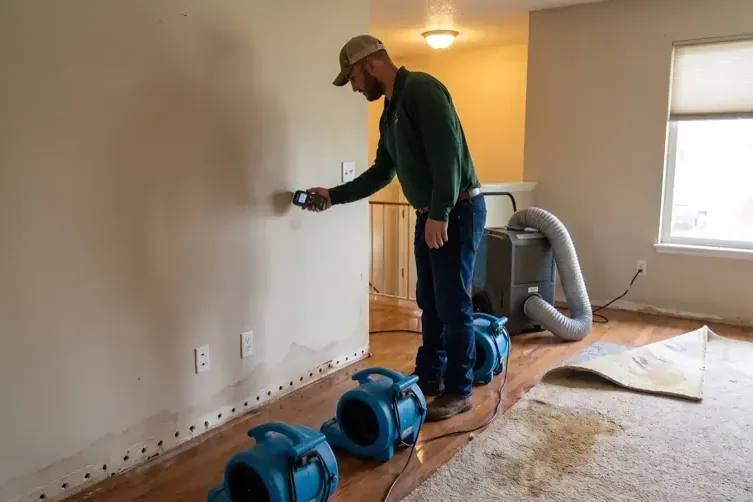
First steps for structural drying and dehumidification in Atlanta
Map the moisture
Meters and thermal imaging show which walls, floors and framing hold water.
Set the equipment
Air movers and dehumidifiers go in where the map shows the highest readings.
Open what must open
Baseboards, wall bottoms and trapped cavities are opened so air can reach wet material.
Read, adjust and finish
Daily readings direct moves, and equipment leaves only when materials match dry reference points.
What does structural drying and dehumidification cost in Atlanta, GA?
Structural drying cost in Atlanta follows the number of rooms and the materials involved. One or two rooms sit lowest, several rooms or a basement cost more, and hardwood, slab or a whole floor costs the most.
One or two rooms
$1,000 to $2,500- Moisture mapping
- Air movers and one dehumidifier
- Daily readings
Several rooms or a basement
$2,500 to $5,000- More equipment
- Wall and baseboard opening
- Extended monitoring
Hardwood, slab or a whole floor
$5,000 to $7,000- Specialty drying panels
- Longer equipment runs
- Detailed reading logs
Ranges only, never a quote: the category of water, the wet square footage, the material class and how soon drying began decide the final number. The water damage cost calculator turns your answers into a planning range.
How a structural drying and dehumidification job is run here
Measured drying, steady dispatch and a clean record are what make the job hold up later.
Crews out at any hour
Nights, weekends and holidays, the nearest available crew rolls with extraction units, meters and dehumidifiers.
A dry goal in numbers
Wet materials are read against an unaffected spot in the same building, and the gear stays until the two match.
Records the insurer can follow
Daily readings, a moisture map and dated photos from before any tear-out go into one claim file.
Planned for the building
Older homes, lofts and newer construction dry differently, so equipment is placed to suit the walls and floors in front of the crew.
Rain in Atlanta is spread fairly evenly through the year, with about 50.43 inches of precipitation in total, so wet structures are a regular need rather than a seasonal one. A flood, a burst pipe or a roof leak leaves moisture behind long after the standing water is pumped out. Drywall, wood framing and subfloors hold that water and release it slowly.
How a structure is dried
Drying is a balance of air movement and humidity control. Air movers push dry air across wet surfaces, while dehumidifiers pull the moisture out of the air so it can be removed instead of recirculated. The team places equipment from a moisture map, adjusts it as readings change and records every visit. Floors that hold water longer, such as hardwood or a slab, can need specialty drying panels.
Questions about equipment, readings or when a room is dry? Ask the drying team.
Ask drying questionsWhat stays and what goes
- Drywall that reads dry after a short run stays in place
- Insulation that stays wet is removed
- Baseboards are pulled to let air reach wall bottoms
- Subfloors and framing are dried until readings are normal
The window that matters
The first 24 to 48 hours matter most, because mold can start growing in that window once materials stay wet. That is why drying begins as soon as the water is extracted, and why daily readings decide whether equipment stays or moves. Most jobs begin with water extraction, and the town service hub lists the other services.
Outside references: Ready.gov flood safety and Georgia Office of the Commissioner of Insurance.
How structural drying and dehumidification is handled, start to finish
- 01
Map the wet areas
Meters and imaging show where water sits.
- 02
Place equipment
Air movers and dehumidifiers go to the wet zones.
- 03
Monitor readings
Numbers are taken and logged at every visit.
- 04
Release the room
Equipment leaves once materials read dry.
Structural drying and dehumidification across Atlanta and nearby communities
Drying calls come from Buckhead, Midtown, Downtown, Inman Park, Old Fourth Ward, West End, Collier Heights, Cascade Heights, Riverside, Bolton, Whittier Mill and the converted housing in West Midtown.
The same service nearby: structural drying and dehumidification in Mableton, East Point, Brookhaven.
Structural Drying and Dehumidification questions, answered
How long does structural drying take?
It depends on the materials and how much water they took in. The team takes readings at every visit and keeps equipment in place until they match dry reference points.
Why are dehumidifiers needed along with fans?
Fans move moisture off surfaces into the air. Dehumidifiers remove that moisture from the air, and without them the room just gets more humid.
Can hardwood floors be dried instead of replaced?
Sometimes, when drying starts early and the boards are not badly cupped. Specialty panels can pull water from wood floors, and readings show whether the boards recover.
Does drywall always have to be removed?
No. Drywall that took clean water briefly can often be dried in place. Material that stays wet, crumbles or took contaminated water is cut out.
Why does equipment run around the clock?
Dry air only helps while it keeps moving and the humidity stays low. Stopping early lets wet material rewet from the air and slows the whole process.
What readings prove a structure is dry?
Readings are compared with dry reference points taken from unaffected materials in the same building. When wet areas match them, the equipment is removed.
Hidden moisture needs a plan
Describe the water event and the rooms it touched, and the team maps the moisture and sets equipment to match.