Slab Leak Water Damage in Atlanta, GA
Water from a pipe under a concrete floor in Atlanta rises into the flooring long before a puddle forms. Leak detection pins down the pipe, then the drying crew lifts what is wet and dries the concrete.
Have the damp slab mapped and driedOpen 24/7: (888) 532-4616
First steps for slab leak water damage in Atlanta
Watch the meter
With every tap and appliance off, look at the water meter; a dial still turning means water is going somewhere.
Close the main
If the floor feels damp or the dial keeps moving, shut the main valve until the plumber arrives.
Book leak detection
Electronic leak detection narrows the search so only a small patch of concrete gets opened.
Photograph the floor
Take pictures of every damp, raised or stained area before flooring comes up.
What does slab leak water damage cost in Atlanta, GA?
Most slab leak jobs in the city run $1,500 to $7,500 for extraction, flooring removal and concrete drying, with the plumber's repair billed on its own. Category, square footage, material class and how soon drying began drive the total.
Single room
$1,500 to $3,000- Flooring and baseboards up
- Meter grid on the concrete
- Desiccant drying
A few rooms
$3,000 to $5,500- Several rooms opened
- Mats on the slab
- Lower walls dried
Large share of the floor
$5,500 to $7,500- Toe kicks pulled
- Extra dehumidifiers
- Daily slab readings
Ranges only, never a quote: the category of water, the wet square footage, the material class and how soon drying began decide the final number. The water damage cost calculator turns your answers into a planning range.
How a slab leak water damage job is run here
Measured drying, steady dispatch and a clean record are what make the job hold up later.
Crews out at any hour
Nights, weekends and holidays, the nearest available crew rolls with extraction units, meters and dehumidifiers.
A dry goal in numbers
Wet materials are read against an unaffected spot in the same building, and the gear stays until the two match.
Records the insurer can follow
Daily readings, a moisture map and dated photos from before any tear-out go into one claim file.
Planned for the building
Older homes, lofts and newer construction dry differently, so equipment is placed to suit the walls and floors in front of the crew.
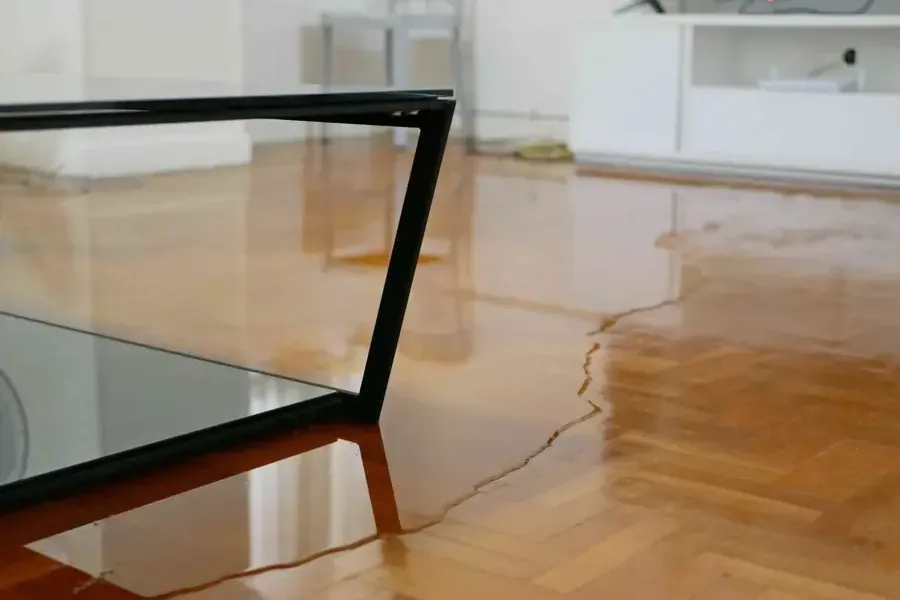
A slab leak is a pressure leak in a supply pipe under or inside a concrete floor. The water works up into the flooring and travels outward underneath it, so the first sign is often a warm spot, a damp carpet edge or lifting planks rather than a puddle. Any house or building on a concrete floor can have one.
Slab leak or a street main break?
The city's Department of Watershed Management supplies the water and may see up to 30 water main breaks and other emergency repairs a month. Water bubbling up in the street or the yard can be a main break, which is reported to Watershed Management Customer Service around the clock. Water rising inside the house, with every fixture off and the meter still moving, points to a leak on the private side.
Warm spot on the floor and a meter that will not stop? Get the slab dried before the flooring fails.
Ask about the leak under the floorSigns to check before calling
- Warmth underfoot in one spot, often over a hot water pipe
- Carpet edges, hardwood or tile turning damp or loose with no spill
- The hiss of running water while every tap is closed
- A meter dial that keeps turning and a bill that climbs
Who repairs the pipe and who dries the floor
Electronic leak detection lets a plumber locate the pipe, then repair it through the concrete or reroute it. The city does not offer warranties on water or sewer service pipes, so ask your insurer how the repair is handled. On the drying side, the crew reads moisture across the concrete and the lower walls, pulls up what is wet, finishes water extraction and runs LGR and desiccant dehumidifiers, as laid out under structural drying.
Outside references: EPA WaterSense leak checks and Georgia Office of the Commissioner of Insurance.
How slab leak water damage is handled, start to finish
- 01
Read the concrete
Meter the slab and the lower walls.
- 02
Pull flooring
Take up what is wet, plus baseboards.
- 03
Dry the slab
Mats plus LGR and desiccant units.
- 04
Confirm dry
Equipment leaves at a dry reading.
Slab leak water damage across Atlanta and nearby communities
Coverage reaches homes and buildings across the city, from Buckhead, Peachtree Battle and Chastain Park to Midtown, Old Fourth Ward, Inman Park, West Midtown, West End and Cascade Heights.
The same service nearby: slab leak water damage in Mableton, East Point, Brookhaven.
Slab Leak Water Damage questions, answered
How can I tell a slab leak from a main break?
Water surfacing in the street or yard can be a main break, reported to Watershed Management Customer Service. Water rising through an indoor floor with every fixture off points to a pipe under the slab.
Does all the flooring have to come up?
Only the flooring that meters show is wet gets lifted, along with baseboards on wet walls. Tile that is still firmly set can sometimes stay.
How long does a concrete slab take to dry?
Plan on four to ten days. Concrete holds water deep and lets it go slowly, which is why drying mats and desiccant units often join the LGR dehumidifiers.
Will insurance pay for slab leak damage?
Many policies cover the sudden water damage after the deductible but treat breaking concrete and fixing the pipe separately. Your own insurer has the final word.
Can new flooring go in right after the repair?
Wait for a dry reading on the slab first. New flooring over damp concrete tends to cup, buckle or come loose from its adhesive.
Does the city warranty the water pipe to the house?
No. The city does not offer warranties on water or sewer service pipes, so ask your insurer how the repair is handled.
Planks lifting with no spill anywhere?
A leak under concrete travels beneath flooring, cabinets and the bottoms of walls. Meters find the wet edge, and the slab gets dried.