Slab leak water damage in Brookhaven
A supply leak under a concrete floor often shows as warm flooring, a damp spot or a water bill that keeps climbing. Crews map the wet area and dry the slab and the surfaces on top.
Ask about a slab leakOpen 24/7: (888) 532-4616
First steps for slab leak water damage in Brookhaven
Check the meter
Turn off every tap and see whether the water meter still moves, which points to a hidden leak.
Shut the main valve
Close the main supply while a plumber locates the leaking pipe.
Note the wet spots
Mark warm or damp areas and take dated photos for the insurer.
Call for mapping
Describe the flooring type so the crew brings the right moisture meters and dryers.
What does slab leak water damage cost in Brookhaven, GA?
Slab leak drying cost follows the size of the wet floor and the flooring that has to come up. The pipe repair itself is a separate plumbing cost. The cards show the usual bands for one room, a few rooms and a whole floor.
One room of flooring
$1,500 to $3,000- Flooring lifted
- Slab dried
- Readings logged
Two to three rooms
$3,000 to $5,500- Wider moisture map
- More equipment
- Baseboards removed
Most of the floor
$5,500 to $7,500- Large area dried
- Extended run time
- Full documentation
Ranges only, never a quote: the category of water, the wet square footage, the material class and how soon drying began decide the final number. The water damage cost calculator turns your answers into a planning range.
How a slab leak water damage job is run here
Measured drying, steady dispatch and a clean record are what make the job hold up later.
Crews out at any hour
Nights, weekends and holidays, the nearest available crew rolls with extraction units, meters and dehumidifiers.
A dry goal in numbers
Wet materials are read against an unaffected spot in the same building, and the gear stays until the two match.
Records the insurer can follow
Daily readings, a moisture map and dated photos from before any tear-out go into one claim file.
Planned for the building
Older homes, lofts and newer construction dry differently, so equipment is placed to suit the walls and floors in front of the crew.
A slab leak is a pressurized supply pipe leaking beneath a concrete floor, where water cannot simply run away. Foundation types vary from one building to the next, so the advice here stays general: it applies to any home or building built on a concrete slab, from an older house to a newer mixed use unit.
What the leak does to the floor
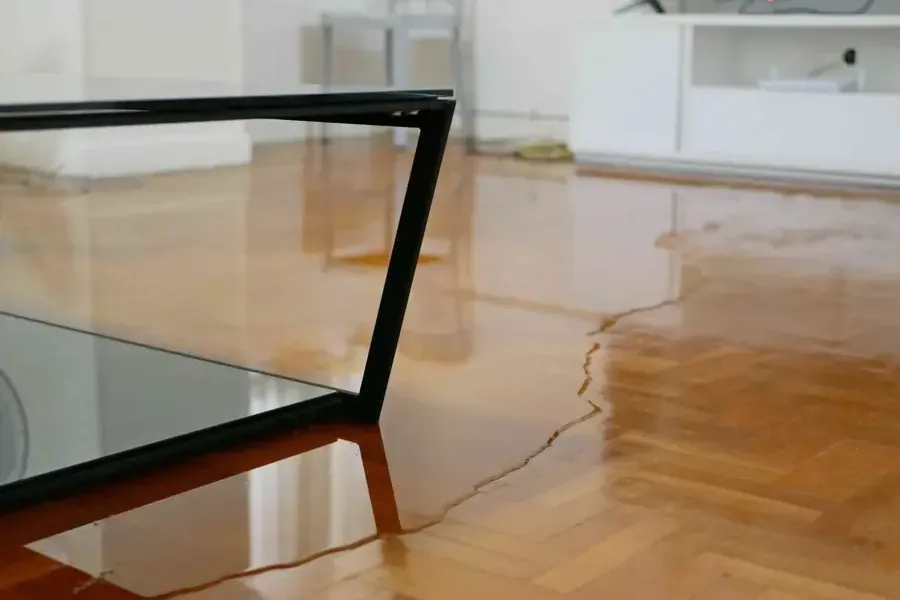
Water pushed up from below saturates the slab and then spreads sideways into baseboards, carpet and the bottom of the drywall. Hardwood cups, tile loosens and laminate swells. The crew uses a moisture meter to map the wet zone across the room instead of guessing from the spot where the water first appeared. Rooms with a hidden source often look dry on top while the slab stays wet for weeks.
Warm floors or damp flooring with no obvious cause? Describe the room and the crew plans a moisture mapping visit.
Ask about moisture mappingSigns worth checking
- Warm patches on the floor with no heating source nearby
- The sound of running water when every tap is off
- Wet or lifting flooring beside an interior wall
- A water bill that rises with no change in use
Drying a slab properly
Concrete releases moisture slowly, so the crew pulls up the flooring that is trapping it and sets dehumidifiers and air movers on the bare slab. A plumber finds and fixes the leak, and the drying work continues until readings settle. Moisture readings are compared with a dry reference room so the end point is based on numbers. Compare this with an appliance supply leak or visit the city hub.
Outside references: EPA WaterSense leak checks and Georgia Office of the Commissioner of Insurance.
How slab leak water damage is handled, start to finish
- 01
Map the slab
Meter floors and lower walls.
- 02
Lift flooring
Remove wet boards, tile or carpet.
- 03
Dry the concrete
Run dehumidifiers and air movers.
- 04
Confirm dry
Take readings until values settle.
Slab leak water damage across Brookhaven and nearby communities
Slab leak calls come from Ashford Park, Drew Valley, Silver Lake, Cambridge Park and Hampton Hall, from units around Brookhaven Village, and from properties along Dresden Drive and Buford Highway.
The same service nearby: slab leak water damage in Mableton, Atlanta, East Point.
Slab Leak Water Damage questions, answered
How is a slab leak found?
A plumber uses listening and pressure tests to locate it. The restoration crew then maps where the moisture has spread so the drying plan matches the real wet area.
Will the flooring need to be replaced?
Often some of it. Hardwood and laminate usually cannot be saved once the slab underneath is saturated, while tile can sometimes be dried in place.
Can the slab dry on its own?
Slowly, but flooring on top traps moisture and invites damage. Equipment with controlled airflow speeds the process and keeps readings on record.
Does insurance cover slab leaks?
Policies vary, and the insurer decides. Many treat the sudden damage to belongings differently from the cost of reaching the pipe, so ask the carrier early.
Is the water contaminated?
A supply leak carries clean water, though it can pick up dirt from the slab and subfloor as it spreads.
How do crews know the slab is dry?
They measure floor and wall moisture daily and compare it with readings from dry areas. Equipment stays until the numbers match.
A hidden leak needs a dry plan
Share the flooring type and the affected rooms so the drying team can prepare the right meters and desiccant equipment.