Basement flooding cleanup in Atlanta
Water on a lower level soaks drywall, framing and stored belongings from the floor up. The cleanup crew pumps it out, removes what cannot be saved and dries the space before the damage climbs the walls.
Start the lower level dry outOpen 24/7: (888) 532-4616
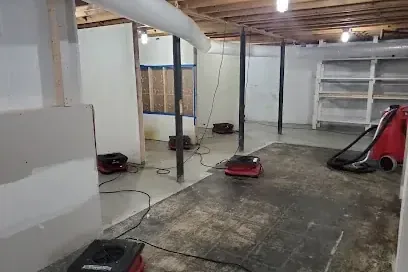
First steps for basement flooding cleanup in Atlanta
Make it safe
Stay out of deep water and keep power off until the panel and outlets are cleared.
Call the crew
Give the depth, the source and what the lower level holds so pumps and vacuums arrive ready.
Pump and strip
Water comes out first, then soaked carpet, padding and low drywall.
Dry and sanitize
Dehumidifiers dry the slab and framing, and surfaces touched by dirty water are cleaned.
What does basement flooding cleanup cost in Atlanta, GA?
Basement flooding cost in Atlanta depends on finish level and the kind of water. An unfinished space with clean water costs the least, and drain backup or flood water costs the most. Floor area also moves the number.
Unfinished, clean water
$2,000 to $4,000- Pump out and vacuum the floor
- Floor drying
- Moisture readings
Finished, clean water
$4,000 to $8,000- Drywall and carpet removed
- Slab and framing drying
- Baseboard replacement prep
Drain backup or flood water
$7,000 to $12,000- Protective gear and disposal
- Porous materials removed
- Surfaces cleaned
Ranges only, never a quote: the category of water, the wet square footage, the material class and how soon drying began decide the final number. The water damage cost calculator turns your answers into a planning range.
How a basement flooding cleanup job is run here
Measured drying, steady dispatch and a clean record are what make the job hold up later.
Crews out at any hour
Nights, weekends and holidays, the nearest available crew rolls with extraction units, meters and dehumidifiers.
A dry goal in numbers
Wet materials are read against an unaffected spot in the same building, and the gear stays until the two match.
Records the insurer can follow
Daily readings, a moisture map and dated photos from before any tear-out go into one claim file.
Planned for the building
Older homes, lofts and newer construction dry differently, so equipment is placed to suit the walls and floors in front of the crew.
Days of heavy rain flooded the Atlanta area in September 2009, with up to 20 inches falling in places across the Southeast. Storms like that fill window wells, overwhelm sump pits and push water through floor cracks. A lower level has nowhere to drain it, so the water stays until a crew removes it.
How the cleanup moves
Power and gas safety come first. The crew then pumps down the standing depth in stages so the walls and slab are not stressed, removes soaked carpet and padding, and cuts drywall above the wet mark. Furniture and boxes that held water are sorted into what can be cleaned and what must be discarded. A final sweep of readings shows which surfaces still hold moisture.
Questions about pumping, drying or what a flooded lower level needs? Ask the cleanup crew.
Ask the cleanup crewWhere basement water comes from
- Heavy rain that seeps through walls and floor cracks
- Backed up drains and clogged floor drains
- Sump pump failure during a storm or power loss
- Creek or street flooding that enters low doors
Rain, runoff and a lower level
A USGS study of streams around the city found that flashiness, how fast flow responds to heavy rain, rises with the amount of paved and roofed ground. More runoff reaching low ground means more pressure on foundations. Street flooding and clogged catch basins are reported to Atlanta Watershed Management Customer Service, while water already inside the house goes to a cleanup crew. When the water came from a drain, the job follows sewage backup cleanup rules, and the town service hub lists the rest.
Outside references: FloodSmart, the National Flood Insurance Program and National Weather Service flood safety.
How basement flooding cleanup is handled, start to finish
- 01
Pump down
Standing water leaves in controlled stages.
- 02
Strip out
Soaked carpet and low drywall are removed.
- 03
Dry the slab
Dehumidifiers pull moisture from concrete.
- 04
Check readings
Meters confirm each surface is dry.
Basement flooding cleanup across Atlanta and nearby communities
Basement and lower level calls come from Buckhead, Peachtree Battle, Chastain Park, Vine City, West End, Cascade Heights, Collier Heights, Inman Park, Old Fourth Ward and Whittier Mill, and the surrounding streets.
The same service nearby: basement flooding cleanup in Mableton, East Point, Brookhaven.
Basement Flooding Cleanup questions, answered
Should a flooded basement be pumped all at once?
No. Pumping in stages keeps water pressure outside the walls and slab in balance, so the crew lowers the level step by step.
What happens to finished basement walls?
Drywall that wicked water above the floor is cut back until the material behind it reads dry. Insulation and baseboards that held water are removed as well.
Can a concrete slab be dried?
Yes. Concrete holds moisture for a long time, so dehumidifiers run until slab and wall readings match dry reference points. Flooring is replaced only after that.
Who handles flooding from a clogged street drain?
Street flooding and clogged catch basins are reported to Atlanta Watershed Management Customer Service. Water that has entered the house is the cleanup crew's job.
What if the water came up from a drain?
Drain water is treated as contaminated. The crew uses protective gear, removes porous materials it touched and cleans the surfaces before any drying equipment goes in.
Are stored boxes and furniture salvageable?
Solid wood and plastic items can often be cleaned. Cardboard, upholstered pieces and papers that sat in water are usually discarded, and the crew lists them for the claim.
Lower level water cannot sit
Tell the crew how deep the water is and what the space holds, and pumps and dryers are matched to the job.