Basement flooding cleanup in Brookhaven
When a lower level fills with water from rain, a failed pump or a backed up drain, speed and a clear plan matter. Crews pump it out, remove wet materials and dry the structure.
Pump out a lower levelOpen 24/7: (888) 532-4616
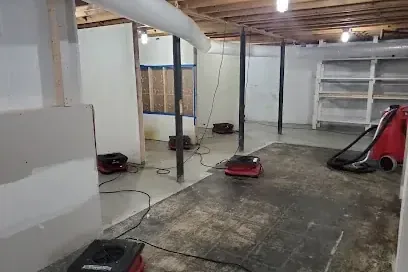
First steps for basement flooding cleanup in Brookhaven
Stay out of deep water
Do not enter standing water near outlets or appliances until the power to that area is off.
Stop new water
Close the main valve if a pipe failed, or note whether rain or a drain is the source.
Photograph the room
Capture the water level, stored items and any marks on the walls for the claim.
Call for pumps
Give the water depth and floor area so the crew brings the right pump capacity.
What does basement flooding cleanup cost in Brookhaven, GA?
Basement cleanup cost depends on how much of the lower level is finished and whether the water was clean. Unfinished space costs less than finished rooms, and a drain backup or flood water adds containment and disposal.
Unfinished, clean water
$2,000 to $4,000- Water pumped out
- Concrete dried
- Readings logged
Finished, clean water
$4,000 to $8,000- Drywall and carpet removed
- Framing dried
- Longer equipment run
Drain backup or flood water
$7,000 to $12,000- Containment required
- Porous items discarded
- Disposal and sanitizing
Ranges only, never a quote: the category of water, the wet square footage, the material class and how soon drying began decide the final number. The water damage cost calculator turns your answers into a planning range.
How a basement flooding cleanup job is run here
Measured drying, steady dispatch and a clean record are what make the job hold up later.
Crews out at any hour
Nights, weekends and holidays, the nearest available crew rolls with extraction units, meters and dehumidifiers.
A dry goal in numbers
Wet materials are read against an unaffected spot in the same building, and the gear stays until the two match.
Records the insurer can follow
Daily readings, a moisture map and dated photos from before any tear-out go into one claim file.
Planned for the building
Older homes, lofts and newer construction dry differently, so equipment is placed to suit the walls and floors in front of the crew.
Not every property has a basement, so the advice here speaks to any building that does have a lower level, whether it is finished or not. In those buildings water arrives from above and below: heavy rain, a failed sump pump, a cracked supply pipe or a drain that backs up. Each source changes the cleanup.
Why lower levels need quick action
Water in a lower level settles into carpet, stored boxes, framing and the bottom of finished walls. It cannot drain away, so it has to be pumped out and the surfaces dried. The crew first confirms whether the water is clean, gray or contaminated, because a drain backup or flood water changes what may stay. Finished walls act like a wick, drawing moisture upward past the visible mark, so the crew meters well above the waterline before deciding where to cut.
Lower level underwater? Give the depth and the likely source, and the crew arranges pumps and a dry out plan.
Report basement floodingWhat the cleanup includes
- Pumping or extracting standing water from the floor
- Cutting out wet drywall, insulation and carpet pad
- Moving stored items to dry ground when it is safe
- Running dehumidifiers until the framing reads dry
Preventing a repeat
Drying fixes the damage, not the cause. A plumber or a drainage specialist can test a sump pump or trace the source. A working sump pump, clear gutters and grading that slopes away from the foundation all reduce the chance of another flood. Compare it with storm flood cleanup or return to the water damage hub.
Outside references: FloodSmart, the National Flood Insurance Program and National Weather Service flood safety.
How basement flooding cleanup is handled, start to finish
- 01
Test the water
Judge whether it is clean or contaminated.
- 02
Pump it out
Remove standing water in stages.
- 03
Strip wet materials
Cut out drywall and soaked carpet.
- 04
Dry the structure
Run dehumidifiers until readings are normal.
Basement flooding cleanup across Brookhaven and nearby communities
Lower level calls come from Ashford Park, Drew Valley, North Brookhaven, Silver Lake, Cambridge Park, Hampton Hall and the neighborhoods near Murphey Candler Park, as well as buildings along Windsor Parkway.
The same service nearby: basement flooding cleanup in Mableton, Atlanta, East Point.
Basement Flooding Cleanup questions, answered
Is a flooded basement water clean?
Not always. Clean supply water becomes gray as it mixes with dirt, and a drain backup or storm water is contaminated from the start. The crew tests before deciding what can stay.
How fast should the water be pumped out?
As soon as it is safe. Pumping too quickly can stress walls when the ground outside is saturated, so the crew removes water in stages.
Will finished walls need to be removed?
Drywall that sat in water usually has to come out below the wet line, and sometimes higher where moisture wicked up the wall.
Can stored belongings be saved?
Items in plastic bins on raised shelves often survive. Cardboard, paper and upholstery that sat in water usually do not, especially after contaminated water.
Does insurance cover basement flooding?
Many policies treat sewer backup and surface water differently from a burst pipe. The insurer decides, so ask what applies and keep photos and receipts.
Does DeKalb County handle this?
DeKalb County Department of Watershed Management handles water and sewer assets in the street. Water that reached the home is a restoration job.
Water below grade needs pumps
Share the depth, the source and the finished materials, and the team prepares the equipment before it heads to the property.