Structural drying and dehumidification in Brookhaven
After the water is gone, moisture stays inside framing, subfloors and drywall. Crews place air movers and dehumidifiers on a plan built from meter readings and keep them running until every material reaches a dry standard.
Plan the dry outOpen 24/7: (888) 532-4616
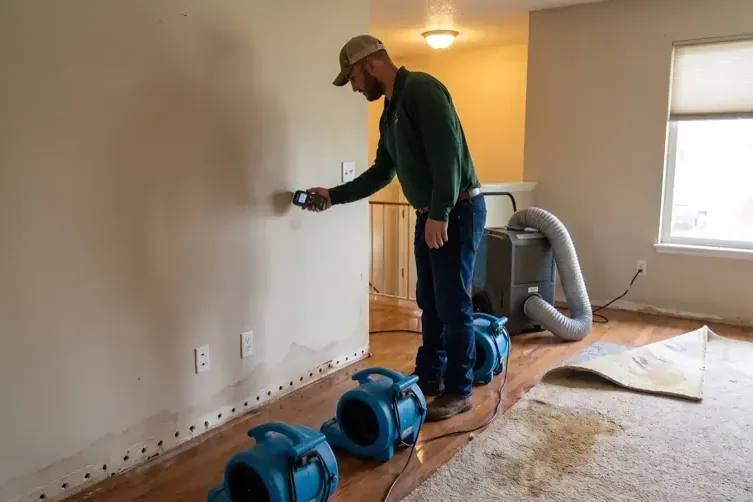
First steps for structural drying and dehumidification in Brookhaven
Remove the water first
Drying equipment works best after standing water has been extracted.
Keep doors and vents clear
Leave the space open so the crew can place machines and move air freely.
Expect noise and warmth
Dehumidifiers and air movers run steadily and warm the room, which helps drying.
Do not move the machines
Equipment is placed by readings, so leave positions to the crew.
What does structural drying and dehumidification cost in Brookhaven, GA?
Structural drying cost follows the number of rooms, the materials involved and how long equipment runs. Carpet dries faster than hardwood or slab, so material type moves the figure as much as room count does.
One or two rooms
$1,000 to $2,500- Small wet zone
- Short equipment run
- Readings logged
Several rooms or a basement
$2,500 to $5,000- More machines placed
- Wall cavities dried
- Daily monitoring
Hardwood, slab or a whole floor
$5,000 to $7,000- Slow drying materials
- Extended run time
- Full documentation
Ranges only, never a quote: the category of water, the wet square footage, the material class and how soon drying began decide the final number. The water damage cost calculator turns your answers into a planning range.
How a structural drying and dehumidification job is run here
Measured drying, steady dispatch and a clean record are what make the job hold up later.
Crews out at any hour
Nights, weekends and holidays, the nearest available crew rolls with extraction units, meters and dehumidifiers.
A dry goal in numbers
Wet materials are read against an unaffected spot in the same building, and the gear stays until the two match.
Records the insurer can follow
Daily readings, a moisture map and dated photos from before any tear-out go into one claim file.
Planned for the building
Older homes, lofts and newer construction dry differently, so equipment is placed to suit the walls and floors in front of the crew.
Drying plans follow the building. Housing here runs from older homes in Historic Brookhaven to development from the 1950s to the 1970s and newer mixed use buildings, and each era uses different framing, finishes and floor assemblies. Moisture left behind in any of them can outlast the visible damage. A drying crew reads those materials before placing the first machine.
How a drying plan is built
The crew meters walls, floors and ceilings to draw the wet boundary, then chooses equipment by the size of the space and the amount of moisture. Air movers push dry air across surfaces, dehumidifiers pull water vapor out of the room and containment keeps the equipment working only on the wet zone. Positions change as the readings change from day to day.
Water removed but walls and floors still damp? Describe what happened and the crew plans a drying schedule.
Discuss the dryingMaterials dry at different rates
- Carpet and pad dry quickly once the water is out
- Drywall and insulation often need removal if saturated
- Hardwood and subfloor dry slowly and need patient airflow
- Concrete and masonry release moisture over a long period
Knowing when drying is finished
Equipment comes out only when readings in wet materials match readings from dry reference points in the same building. The crew records each visit so the owner and the insurer see steady progress instead of a guess. See water extraction and removal or return to the city hub.
Outside references: Ready.gov flood safety and Georgia Office of the Commissioner of Insurance.
How structural drying and dehumidification is handled, start to finish
- 01
Map the moisture
Meter walls, floors and ceilings in every nearby room.
- 02
Place equipment
Set air movers and dehumidifiers by wet zone.
- 03
Check daily
Adjust machines as the readings change.
- 04
Confirm dry
Match readings to dry reference points.
Structural drying and dehumidification across Brookhaven and nearby communities
Drying visits reach Ashford Park, Drew Valley, Lynwood Park, LaVista Park, Lenox Park and Historic Brookhaven, plus mixed use buildings and offices along Peachtree Road and Buford Highway.
The same service nearby: structural drying and dehumidification in Mableton, Atlanta, East Point.
Structural Drying and Dehumidification questions, answered
How long does structural drying take?
It depends on the materials and the amount of water. Readings, not a set number of days, decide when equipment can be removed.
Why do dehumidifiers matter?
Air movers only push moisture around. Dehumidifiers remove it from the air so walls and floors keep releasing water into drier air.
Can drywall be dried in place?
Sometimes, when the water was clean and caught early. Saturated or contaminated drywall is usually cut out because it will not dry properly.
Will the equipment make the home noisy and warm?
Yes. Air movers and dehumidifiers are loud and raise the room temperature, which is normal and helps drying. The crew arranges the layout to keep walkways clear.
How are older homes dried?
Older homes often have plaster, thick framing and layered floors that dry slowly. The crew meters each layer and adjusts the plan to suit.
What is the dry standard?
It is a set of readings taken from unaffected areas of the same building. Wet materials must match those readings before the equipment leaves.
Damp framing needs a drying plan
Share the rooms involved, the materials and what was already removed, and the team sizes the equipment before heading to the property.