Crawl Space Water Removal in College Park, GA
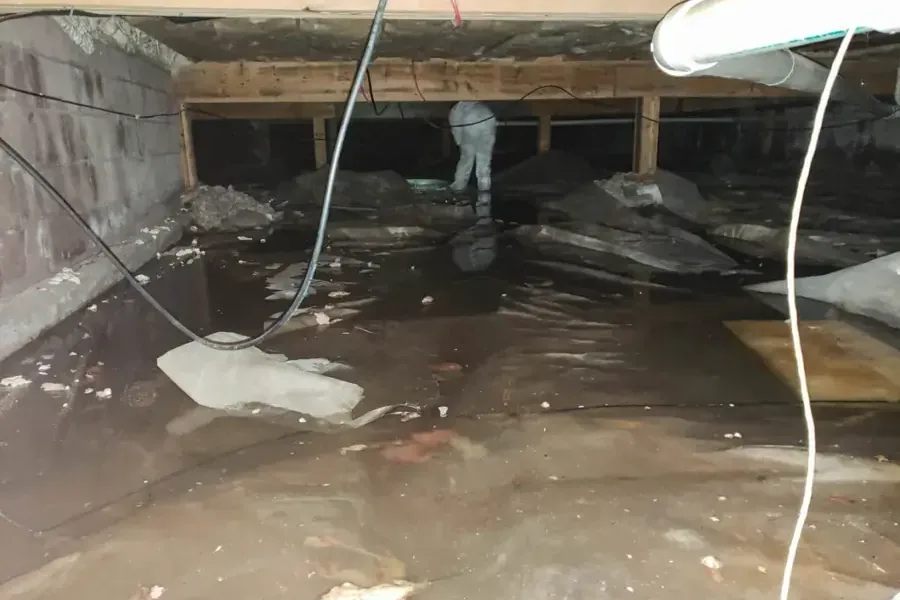
Water on a crawl space vapor barrier soaks insulation, joists and the subfloor above. The mitigation team pumps it out, removes wet insulation and dries the framing before the rooms overhead are affected.
Pump the water from under the floorOpen 24/7: (888) 532-4616
First steps for crawl space water removal in College Park
Find the water source
Look for a leaking pipe, a drain problem or runoff, and shut off the supply if a pipe is leaking.
Stay out of the space
Standing water near wiring or a sagging barrier is unsafe, so leave entry to trained technicians.
Note floor changes
Soft boards, a musty smell or a cold floor above the space help the crew locate wet areas.
Call for pumping
Share what was seen, so the truck carries pumps, hoses and dehumidifiers sized for tight access.
What does crawl space water removal cost in College Park, GA?
A pump-out of clean water often costs $1,000 to $2,500, taking out wet insulation brings it near $4,500, and drain pipe or flood water that needs contamination controls can reach $6,500, depending on the access and the area.
Pump-out, clean water
$1,000 to $2,500- Pooled water pumped
- Barrier checked
- Framing metered
Insulation removed
$2,500 to $4,500- Wet batts pulled
- Joists dried
- Dehumidifiers set
Drain pipe or flood water
$4,000 to $6,500- Contaminated water rules
- Surfaces treated
- Longer dry-down
Ranges only, never a quote: the category of water, the wet square footage, the material class and how soon drying began decide the final number. The water damage cost calculator turns your answers into a planning range.
How a crawl space water removal job is run here
Measured drying, steady dispatch and a clean record are what make the job hold up later.
Crews out at any hour
Nights, weekends and holidays, the nearest available crew rolls with extraction units, meters and dehumidifiers.
A dry goal in numbers
Wet materials are read against an unaffected spot in the same building, and the gear stays until the two match.
Records the insurer can follow
Daily readings, a moisture map and dated photos from before any tear-out go into one claim file.
Planned for the building
Older homes, lofts and newer construction dry differently, so equipment is placed to suit the walls and floors in front of the crew.
Water in a crawl space is easy to miss because nobody walks there. It collects on the vapor barrier, soaks the batts hanging between the joists and releases humidity into the floor above for days. By the time a floor feels soft or a musty smell reaches the living space, the framing has often been wet for a while.
No assumption about the foundation
Foundation types are not documented for the city, so nothing here claims that crawl spaces are common. The service applies to any house that has one. Pooled water usually comes from heavy rain runoff, a leaking supply pipe or a failed drain, and the source decides how the job is handled. Clean supply water is pumped and dried, while drain or flood water is treated as contaminated, and sewage follows sewage backup cleanup rules.
Soft floor, musty smell or pooled water under the house? Describe what was seen and the crew plans the pumps.
Ask about crawl space pumpingWhat happens under the house
- Pumps clear pooled water from the barrier and low spots in the soil
- Saturated insulation is pulled down and bagged for disposal
- Joists and subfloor are read with meters and dried in place
- Vapor barrier is checked, with torn or soaked sections noted for repair
Reaching the work area
Technicians in protective gear enter through the access door, set a pump and run hoses outside. Fans and dehumidifiers are staged so humidity leaves the space rather than rising into the home. Daily readings show when the framing returns to a normal moisture level.
Outside references: Ready.gov flood safety and FloodSmart, the National Flood Insurance Program.
How crawl space water removal is handled, start to finish
- 01
Pump out
Pooled water leaves the crawl space
- 02
Strip
Wet insulation comes down and is bagged
- 03
Dry the framing
Joists and subfloor dried in place with fans
- 04
Check
Humidity logged until normal
Crawl space water removal across College Park and nearby communities
Crawl space calls span Historic College Park, Downtown College Park and Airport City, plus the 30337 and 30349 ZIP codes and the older streets near Main Street, wherever water collects under a floor.
The same service nearby: crawl space water removal in Mableton, East Point, Atlanta.
Crawl Space Water Removal questions, answered
How does water get into a crawl space?
Heavy rain runoff, a leaking pipe or a failed drain can all send water under the floor, and the source decides how the job is handled and what protection the crew wears.
Does wet insulation have to come out?
Usually yes. Saturated batts lose their value and hold moisture against the framing, so they are removed and replaced once the space is dry.
Can the floor above be damaged?
Yes. Joists and subfloor absorb water and humidity, so they are metered and dried to protect the rooms overhead from soft spots and swelling.
Are crawl spaces common in the city?
That is not documented, so no claim is made. The page applies to any house that has one.
Is drain water in a crawl space dangerous?
It can be contaminated, so technicians wear protective gear and treat the space after removal.
How is a vapor barrier checked?
Torn or soaked sections are noted, since a damaged barrier lets ground moisture rise again after the job and the same problem can return.
Water under the floor?
The mitigation team can set pumps and hoses through the access door and dry the framing overhead. Call with the details.