Water Extraction and Removal in College Park, GA
When a storm, a failed appliance or a split pipe leaves water across the floor, the extraction crew pulls it out first so wet carpet, pad and framing stop absorbing it.
Start pumping out the wet floorsOpen 24/7: (888) 532-4616
First steps for water extraction and removal in College Park
Stop the source
Shut the main valve or the fixture valve so the water stops growing, then switch off breakers to the wet rooms.
Photograph the floor
Take dated photos of every wet room and the damaged contents before anything is dragged or lifted.
Raise what is dry
Move small furniture and electronics onto dry counters, and prop sofa legs up off soaked carpet.
Call for pumps
Describe the wet rooms and the source so the truck carries the right extraction equipment.
What does water extraction and removal cost in College Park, GA?
Extraction is usually the smallest part of a water loss. One room of clean water often lands near $400 to $1,200, while contaminated storm water or a lower level pushes the work into the higher tiers, and a moisture map sets the final scope.
Single room, clean water
$400 to $1,200- One room of carpet or tile
- Clean supply water
- Pumps and meters
Basement or several rooms
$1,200 to $3,500- Several rooms affected
- Pad and trim removed
- Extended extraction time
Contaminated water
$3,000 to $6,000- Storm or gray water
- Porous materials removed
- Surfaces cleaned
Ranges only, never a quote: the category of water, the wet square footage, the material class and how soon drying began decide the final number. The water damage cost calculator turns your answers into a planning range.
How a water extraction and removal job is run here
Measured drying, steady dispatch and a clean record are what make the job hold up later.
Crews out at any hour
Nights, weekends and holidays, the nearest available crew rolls with extraction units, meters and dehumidifiers.
A dry goal in numbers
Wet materials are read against an unaffected spot in the same building, and the gear stays until the two match.
Records the insurer can follow
Daily readings, a moisture map and dated photos from before any tear-out go into one claim file.
Planned for the building
Older homes, lofts and newer construction dry differently, so equipment is placed to suit the walls and floors in front of the crew.
Water on a floor does not stay put. It wicks into carpet pad, baseboards and the bottom of the drywall, and after heavy rain, Flint River headwater runoff can fill yards and parking lots before it ever reaches a door. Getting the water out quickly decides how much drying comes next, and how much has to be torn out.
How the extraction crew works
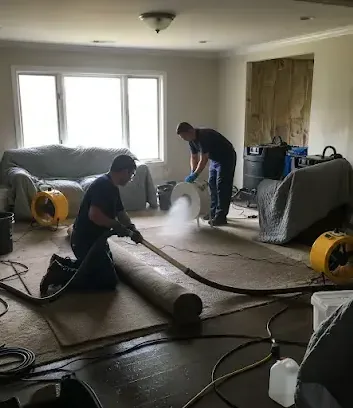
The crew first finds where the water came from and which rooms it reached. Truck-mounted units handle large areas, while portable extractors reach closets, stairs and tight corners. Carpet is lifted and the pad is checked, since saturated pad rarely survives, and wands draw water out of hardwood and tile seams. A moisture meter then shows what still holds water, and structural drying takes over from there.
Water on the floor right now? Say which rooms are wet and the crew plans the pumps from there.
Bring in a pump crewWhat comes out and what stays
- Standing water on carpet, tile, hardwood and vinyl floors, removed first
- Saturated pad that cannot be dried in place, lifted and discarded
- Baseboards and low drywall once water has wicked up into them
- Furniture and belongings moved or propped off the wet floors
Why speed matters after a storm
Finding the Flint reports that during heavy rain the Flint River headwaters surge into parking lots and backyards in the East Point and College Park area. Storm water carries soil and can carry sewage, so it is treated as contaminated, and the extraction stage becomes the first stage of cleanup. Every other service is listed on the city page for reference.
Outside references: Ready.gov flood safety and Georgia Office of the Commissioner of Insurance.
How water extraction and removal is handled, start to finish
- 01
Assess the loss
Find the source and the wet rooms
- 02
Extract the water
Pumps clear carpet, tile and wood
- 03
Meter the structure
Readings show what still holds water
- 04
Hand off to drying
Air movers and dehumidifiers are sized and set
Water extraction and removal across College Park and nearby communities
Extraction calls reach Historic College Park, Downtown College Park and Airport City, plus the 30337 and 30349 ZIP codes, the Main Street corridor and the parking lots and yards that fill during heavy rain.
The same service nearby: water extraction and removal in Mableton, East Point, Atlanta.
Water Extraction and Removal questions, answered
How fast does the water have to come out?
As fast as possible. Water moves into pad, trim and drywall the longer it sits, and growth can start on damp materials within 24 to 48 hours, so pumping comes before anything else.
Can wet carpet be saved?
Often, when the water was clean and extraction began early, though saturated pad is usually discarded and replaced. Carpet that sat in contaminated water is a different case and is generally removed.
Is storm water different from a pipe leak?
Yes. Runoff can carry soil and sewage, so it is treated as contaminated, and porous materials it touched may be removed.
What happens after the water is gone?
Moisture meters check floors and walls, then air movers and dehumidifiers dry what remains until the readings match a dry reference. Those daily readings also go into the claim file.
Does extraction work on hardwood and tile?
Yes. Wands and flat tools lift water from surfaces and seams, though hardwood may need specialty drying afterward to avoid cupping.
Can extraction start before the adjuster visits?
Yes. Photograph the damage first, and the crew keeps dated records so the claim file stays complete.
Water standing in the house?
Pumps and wands can start lifting the water as soon as dispatch has the details. Call now and describe the source.