Structural Drying and Dehumidification in College Park, GA
After the standing water is gone, walls, floors and framing still hold moisture. The drying team maps it, places dehumidifiers and air movers, and logs readings until every material reaches a dry goal.
Map the moisture and start dryingOpen 24/7: (888) 532-4616
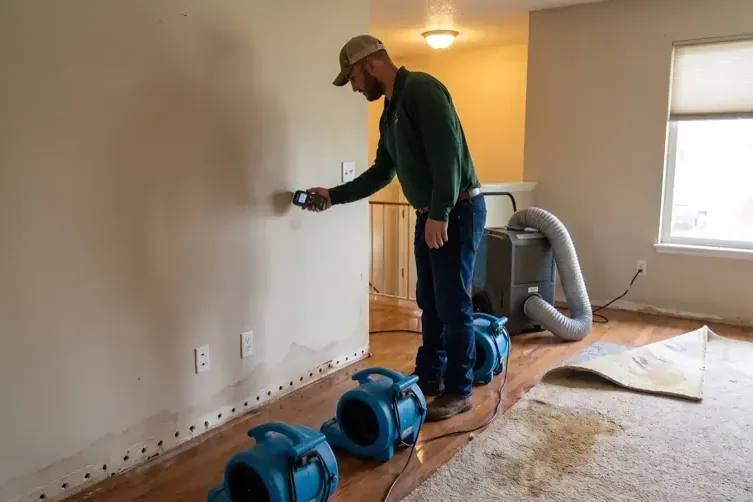
First steps for structural drying and dehumidification in College Park
Report what got wet
List the rooms, floors and walls the water touched so the mapping can be planned.
Keep doors and windows shut
Closed rooms let dehumidifiers remove moisture instead of replacing it with outside air.
Leave the equipment running
Switching units off early lets materials rewet and stretches the dry-down.
Share the daily readings
Logs of humidity and moisture help the adjuster see how the work progressed.
What does structural drying and dehumidification cost in College Park, GA?
One or two rooms often cost $1,000 to $2,500 to dry, several rooms or a lower level $2,500 to $5,000, and hardwood, slab or a whole floor up to $7,000, since dense materials need longer equipment time.
One or two rooms
$1,000 to $2,500- Equipment set in place
- Short dry-down
- Daily readings
Several rooms or a basement
$2,500 to $5,000- More dehumidifiers
- Wall cavities dried
- Extended monitoring
Hardwood, slab or a whole floor
$5,000 to $7,000- Desiccant units added
- Slow-drying materials
- Longest dry-down
Ranges only, never a quote: the category of water, the wet square footage, the material class and how soon drying began decide the final number. The water damage cost calculator turns your answers into a planning range.
How a structural drying and dehumidification job is run here
Measured drying, steady dispatch and a clean record are what make the job hold up later.
Crews out at any hour
Nights, weekends and holidays, the nearest available crew rolls with extraction units, meters and dehumidifiers.
A dry goal in numbers
Wet materials are read against an unaffected spot in the same building, and the gear stays until the two match.
Records the insurer can follow
Daily readings, a moisture map and dated photos from before any tear-out go into one claim file.
Planned for the building
Older homes, lofts and newer construction dry differently, so equipment is placed to suit the walls and floors in front of the crew.
Removing standing water does not finish a water loss. Moisture lingers in drywall, plaster, framing and subfloors, and unless it is driven out in a controlled way, it can warp wood, loosen finishes and feed mold growth within 24 to 48 hours.
Drying in historic buildings
The College Park Historic District holds 853 properties on the National Register of Historic Places across 606 acres, so structural drying there often involves historic buildings. Nothing is claimed about their materials. The approach is careful in any older building: meters decide what is wet, original floors, plaster and trim are protected where possible, and removal is limited to materials that cannot be dried. Newer buildings in Downtown College Park follow the same measured process, and a fresh flood starts with water extraction.
Walls still damp after the water is gone? Share the rooms involved and the team plans the equipment.
Start the readingsThe equipment and what it does
- Low-grain dehumidifiers pull water vapor out of the air
- Air movers push dry air across wet floors and walls
- Desiccant units handle dense materials and cold rooms
- Meters and a thermal camera show what is still wet
How the dry goal is set
The crew measures a dry spot in an unaffected part of the same building and uses that reading as the reference. Equipment runs until the wet materials come close to it, and each day's humidity, temperature and moisture numbers go into the log. The numbers, not the calendar, tell the team when to remove the equipment.
Outside references: Ready.gov flood safety and Georgia Office of the Commissioner of Insurance.
How structural drying and dehumidification is handled, start to finish
- 01
Map the moisture
Meters and thermal imaging locate every wet material
- 02
Place equipment
Dehumidifiers and air movers matched to each room
- 03
Monitor daily
Readings recorded and compared to the dry reference
- 04
Release
Equipment removed at dry goal
Structural drying and dehumidification across College Park and nearby communities
Drying work covers Historic College Park, Downtown College Park and Airport City, the Main Street corridor and the 30337 and 30349 ZIP codes, in older buildings and newer ones alike.
The same service nearby: structural drying and dehumidification in Mableton, East Point, Atlanta.
Structural Drying and Dehumidification questions, answered
How long does structural drying take?
Several days is common, but the materials, the water category and the area involved change that, and readings decide when it ends rather than a fixed schedule.
Why are dehumidifiers needed as well as fans?
Fans move air, while dehumidifiers remove the moisture from it. Without both, humidity can rise and slow the drying, and nearby rooms can pick up moisture too.
Can historic plaster and trim be dried safely?
Often yes. Meters direct the work, and the team limits removal to materials that cannot be dried, so original floors, plaster and trim are kept wherever possible.
Is anything claimed about historic building materials?
No. Only the property count and acreage of the National Register district are cited, not construction types or build dates.
When is the job done?
When wet materials read close to an unaffected reference spot, and the log shows stable readings over consecutive days in every affected room.
Does the insurer see the readings?
Yes. The daily log, photos and moisture map are part of the file for the claim, so the adjuster can follow the work.
Wet walls or floors after a loss?
Meters and a thermal camera show where moisture remains, and matched equipment brings it down to the dry goal. Call to begin.