Structural drying in East Point
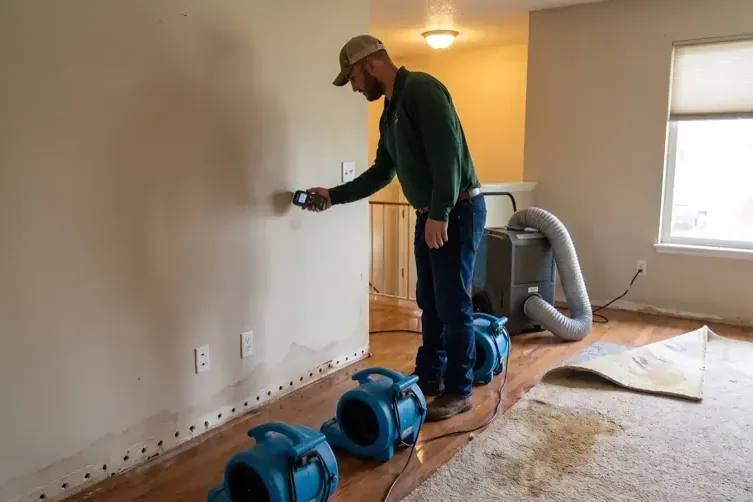
Once standing water is gone, moisture stays locked in framing, subfloors and wall cavities. The drying team uses air movers, dehumidifiers and daily readings to bring the whole building back to normal levels.
Start drying the structureOpen 24/7: (888) 532-4616
First steps for structural drying and dehumidification in East Point
Keep the power safe
Do not run household fans or heaters in rooms with standing water or wet outlets.
Open interior doors
Let air move between wet and dry rooms while waiting for the drying team.
Lift loose items
Take rugs, books and wet fabric out of the area so they do not hold moisture.
Call for a drying plan
Describe which rooms and materials got wet so equipment can be sized correctly.
What does structural drying and dehumidification cost in East Point, GA?
Structural drying price depends on the number of wet rooms and the materials involved. One or two rooms is the low end, while hardwood, slab or a whole floor needs the most equipment and time.
One or two rooms
$1,000 to $2,500- Small wet zone
- Fans and dehumidifier
- Short monitoring
Several rooms or a basement
$2,500 to $5,000- Larger wet zone
- More equipment
- Daily readings
Hardwood, slab or a whole floor
$5,000 to $7,000- Dense materials
- Longest drying
- Extended monitoring
Ranges only, never a quote: the category of water, the wet square footage, the material class and how soon drying began decide the final number. The water damage cost calculator turns your answers into a planning range.
How a structural drying and dehumidification job is run here
Measured drying, steady dispatch and a clean record are what make the job hold up later.
Crews out at any hour
Nights, weekends and holidays, the nearest available crew rolls with extraction units, meters and dehumidifiers.
A dry goal in numbers
Wet materials are read against an unaffected spot in the same building, and the gear stays until the two match.
Records the insurer can follow
Daily readings, a moisture map and dated photos from before any tear-out go into one claim file.
Planned for the building
Older homes, lofts and newer construction dry differently, so equipment is placed to suit the walls and floors in front of the crew.
Pulling water off a floor is only half of a restoration job. Wood, drywall and concrete drink water and give it back slowly, so a structure that looks dry can still hold enough moisture to warp floors and feed mold in 24 to 48 hours. Structural drying is the careful second half of the work.
How wet buildings dry in practice
Air movers push dry air across surfaces, and dehumidifiers pull the moisture out of the room so the air can keep absorbing more. Walls may get small holes or removed baseboards so air reaches the cavity. The city notes that flooding here usually harms contents more than structure, but a soaked structure still needs this careful treatment. Technicians check readings again after the equipment has run for a day, because a surface that feels dry can still hold water inside.
Water gone but walls still damp? Describe the rooms to a drying team and a plan is set.
Describe the wet roomsWhat the monitoring involves
- Setting a dry standard from unaffected materials in the home
- Taking meter readings at the same spots on each visit
- Moving equipment as the wet zone shrinks
- Removing equipment only when readings reach the standard
Different homes dry at different speeds
Older bungalows near downtown have layered flooring and tight cavities, while larger brick ranch style homes farther out may have garages or basements with concrete that releases water slowly. Both respond to the same method, but the equipment count and the drying period differ.
Outside references: Ready.gov flood safety and Georgia Office of the Commissioner of Insurance.
How structural drying and dehumidification is handled, start to finish
- 01
Set the target
Dry readings from unaffected rooms become the goal.
- 02
Place equipment
Air movers and dehumidifiers are positioned.
- 03
Monitor daily
Readings show whether the wet zone is shrinking.
- 04
Remove at dry
Equipment leaves only after readings match.
Structural drying and dehumidification across East Point and nearby communities
Drying work reaches homes across Jefferson Park, Colonial Hills, Marion Park and Piney Wood Hills, plus River Walk, Frog Hollow, Sumner Park, Semmes Park and homes along Headland Drive.
The same service nearby: structural drying and dehumidification in Mableton, College Park, Atlanta.
Structural Drying and Dehumidification questions, answered
How long does structural drying usually take?
Most jobs take several days, with larger losses or dense materials like hardwood and concrete taking longer. Humidity indoors and the weather outside also shift the schedule.
Why are dehumidifiers needed as well as fans?
Fans move air, but dehumidifiers remove the moisture that air absorbs, otherwise the room just gets humid. Running one without the other leaves the job half done.
Can drying be done without removing materials?
Often. Drying in place saves flooring and cabinets, but badly soaked padding or drywall may still need to come out.
How does the crew know the structure is dry?
Moisture meters compare readings against unaffected materials in the same home, and equipment stays until the numbers match. If a reading lags, the crew adds equipment or opens another cavity.
Will the equipment make the house loud or hot?
It is noisy and warms the rooms somewhat, which is a normal part of pulling moisture out of a building.
Does insurance require drying records?
Adjusters often ask for them, and a daily log of readings and equipment shows exactly what was done.
Bring the structure back to dry
Tell the crew what got wet and for how long so the right equipment count is planned.