Water extraction and removal in Brookhaven
Standing water in carpet, tile or hardwood keeps soaking into the structure the longer it sits. Crews remove it with pumps and extractors, then open and dry whatever stayed wet.
Send a pump crewOpen 24/7: (888) 532-4616
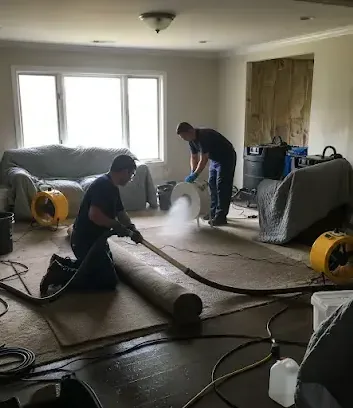
First steps for water extraction and removal in Brookhaven
Stop the source
Close the valve or switch off the appliance if it is safe, and keep everyone away from standing water near outlets.
Photograph first
Take photos of the water and the damage before anything moves so the insurer has a clear record.
Call and describe
Say which rooms are wet and how deep the water is so the crew brings enough pumps.
Stay off wet floors
Walking on soaked carpet spreads water into dry rooms and pushes it deeper into the pad.
What does water extraction and removal cost in Brookhaven, GA?
Extraction by itself costs less than a full dry out and rebuild, and the range moves with how many rooms are wet and whether the water was clean. The three cards below show the broad bands for a single room, a larger area and contaminated water.
Single room, clean water
$400 to $1,200- One room affected
- Water pumped out
- Readings logged
Basement or several rooms
$1,200 to $3,500- More water to remove
- Pad and trim removed
- Longer equipment run
Contaminated water
$3,000 to $6,000- Protective gear used
- Porous items discarded
- Disposal and sanitizing
Ranges only, never a quote: the category of water, the wet square footage, the material class and how soon drying began decide the final number. The water damage cost calculator turns your answers into a planning range.
How a water extraction and removal job is run here
Measured drying, steady dispatch and a clean record are what make the job hold up later.
Crews out at any hour
Nights, weekends and holidays, the nearest available crew rolls with extraction units, meters and dehumidifiers.
A dry goal in numbers
Wet materials are read against an unaffected spot in the same building, and the gear stays until the two match.
Records the insurer can follow
Daily readings, a moisture map and dated photos from before any tear-out go into one claim file.
Planned for the building
Older homes, lofts and newer construction dry differently, so equipment is placed to suit the walls and floors in front of the crew.
Water extraction comes first because every later step depends on it. The city mixes older houses in Historic Brookhaven, mixed use buildings around the MARTA station and denser housing along Buford Highway, and each building type holds water in different places. A response team starts by finding where the water went, not only where it shows.
How extraction changes with the building
In a house with carpet over pad, the crew lifts water from both layers with weighted extractors and usually removes the pad once it is saturated. Hardwood and tile need low profile tools and patient drying instead of aggressive pulling. In a mixed use building, the team checks the unit below and any walls shared with neighbors, because water follows gravity and framing.
Water still standing in the building? Describe the rooms and the crew arranges pumps and drying equipment for the job.
Talk through the water lossWhat the crew does on site
- Locate the source and stop the flow if it is still running
- Remove standing water with pumps and truck mounted extractors
- Take out carpet pad and any material too wet to save
- Set air movers and dehumidifiers and record the first readings
When pulling water out is not enough
Visible water is only the first layer of the problem. Moisture stays in subfloors, baseboards and the lower part of walls, so drying equipment has to follow the pumps. Water that came from a drain or from outside is treated as contaminated, which changes what can be saved. Wet materials can grow mold within 24 to 48 hours, so the drying plan is set during the first visit. Read about structural drying or return to all water damage services.
Outside references: Ready.gov flood safety and Georgia Office of the Commissioner of Insurance.
How water extraction and removal is handled, start to finish
- 01
Find the water
Trace the source and meter every nearby room first.
- 02
Remove it
Extract standing water and pull soaked pad.
- 03
Dry the area
Run air movers and dehumidifiers on wet zones.
- 04
Confirm results
Check readings until every material is dry.
Water extraction and removal across Brookhaven and nearby communities
Calls come from Ashford Park, Drew Valley, Lynwood Park, LaVista Park and Lenox Park, from homes and shops around Peachtree Road, Dresden Drive and Windsor Parkway, and from Buford Highway properties.
The same service nearby: water extraction and removal in Mableton, Atlanta, East Point.
Water Extraction and Removal questions, answered
How soon should standing water be removed?
As soon as it is safe, because water spreads into walls and subfloors the longer it stays. An early call gives the crew the best chance of saving the flooring.
Can wet carpet be saved?
Clean water caught early can sometimes be extracted and dried in place, although the pad is often removed. Sewage or flood water contamination usually means the carpet goes.
Does the crew move furniture?
Light items are shifted out of the way and heavy pieces are blocked up off the wet floor. Valuables and electronics should be moved by the owner when it is safe.
What equipment is used?
Pumps, extractors, air movers, dehumidifiers and moisture meters, chosen to match the amount of water and the type of floor.
What if the water came from a street main?
Street mains belong to DeKalb County Department of Watershed Management, which handles repairs outside the property. The restoration crew handles the water that got inside.
Does the crew handle apartments and shops?
Yes. Extraction applies to apartments, offices and shops along Peachtree Road and Buford Highway, with extra attention to neighboring units and shared walls.
Standing water needs a plan
Share what is wet, how deep the water is and where it came from, and the response team loads the right extraction gear for the property.