Water extraction for Atlanta homes
Standing water settles into carpet, padding and baseboards. The extraction crew pumps and vacuums it out, then hands the structure to the drying team, whether the source was a creek, a broken supply or a leak indoors.
Send an extraction crew nowOpen 24/7: (888) 532-4616
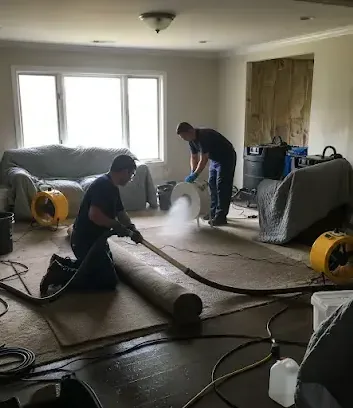
First steps for water extraction and removal in Atlanta
Call and describe
Share the depth, the rooms and whether the source still runs.
Stop and protect
The crew shuts off or isolates the source, lifts furniture off wet floors and protects dry areas.
Pump and vacuum
Standing depth goes first, then carpet, padding and hard floors are worked until bulk water stops coming up.
Hand off to drying
Moisture readings set the drying plan, with air movers and dehumidifiers placed for the wet zones.
What does water extraction and removal cost in Atlanta, GA?
Water extraction cost depends on depth, the area wet, the number of rooms and whether the water is clean. Prices for Atlanta homes sit in three bands, shown below, and contaminated water costs the most because of added safety steps and disposal.
Single room, clean water
$400 to $1,200- Pump and wet vacuum
- Carpet pad removal
- Final moisture check
Basement or several rooms
$1,200 to $3,500- Deeper pumping runs
- Padding and baseboard removal
- Dehumidifier placement
Contaminated water
$3,000 to $6,000- Protective gear and containment
- Porous material disposal
- Surface sanitizing steps
Ranges only, never a quote: the category of water, the wet square footage, the material class and how soon drying began decide the final number. The water damage cost calculator turns your answers into a planning range.
How a water extraction and removal job is run here
Measured drying, steady dispatch and a clean record are what make the job hold up later.
Crews out at any hour
Nights, weekends and holidays, the nearest available crew rolls with extraction units, meters and dehumidifiers.
A dry goal in numbers
Wet materials are read against an unaffected spot in the same building, and the gear stays until the two match.
Records the insurer can follow
Daily readings, a moisture map and dated photos from before any tear-out go into one claim file.
Planned for the building
Older homes, lofts and newer construction dry differently, so equipment is placed to suit the walls and floors in front of the crew.
When Hurricane Helene rain sent Peachtree Creek over its banks in Buckhead in September 2024, the first need inside each flooded house was the same: get the water out. Extraction is the opening move on any wet floor, whether the water came from a creek, a broken supply or a slow leak. Water left sitting keeps moving into the subfloor and the bottoms of the walls.
What the extraction crew actually does
The crew starts by finding where the water is deepest and stopping any source that is still running. Submersible pumps clear standing depth, then wand tools pull water out of carpet and padding. Hard floors get squeegee and vacuum passes. Moisture readings on baseboards and lower drywall show how far the water traveled, and those readings decide what is dried in place and what is removed. Drying then continues under structural drying.
Questions about pumping, drying or what a wet floor will need? Ask the crew before the water spreads further.
Ask the crew a questionWater sources this covers
- Creek or storm water that entered through doors and low openings
- Supply breaks and burst pipes inside walls, ceilings or floors
- Water heater, washer and dishwasher leaks that spread across floors
- Drain backups, which the crew handles with extra protective steps
Why speed matters after water reaches the floor
Porous materials such as carpet padding and drywall hold water like a sponge, and the damage grows while it stays. The extraction team works to remove bulk water first because it is faster than drying it out later. Timing depends on traffic, the weather and how many losses are open, so the sooner the call is made, the sooner the pumps are running. Rain in the city is spread fairly evenly through the year, so wet floors are not just a stormy season problem. Other water jobs are listed on the town service hub.
Outside references: Ready.gov flood safety and Georgia Office of the Commissioner of Insurance.
How water extraction and removal is handled, start to finish
- 01
Survey the loss
Depth, source and wet materials are noted room by room.
- 02
Extract water
Pumps and wet vacuums clear standing water and saturated carpet.
- 03
Check moisture
Meters show what still holds water in walls and subfloors.
- 04
Start drying
Air movers and dehumidifiers take over from the pumps.
Water extraction and removal across Atlanta and nearby communities
Extraction crews serve Buckhead, Midtown, Downtown, Inman Park, Old Fourth Ward, West End, Cascade Heights and Collier Heights, along with the creek corridors around Peachtree Battle and Chastain Park.
The same service nearby: water extraction and removal in Mableton, East Point, Brookhaven.
Water Extraction and Removal questions, answered
What does water extraction mean?
It is the removal of standing and absorbed water using pumps, wet vacuums and extraction wands. It comes before drying, because the dryers work better once bulk water is gone.
Can carpet be saved after extraction?
Often clean water carpet can be saved when extraction starts early, but the padding underneath is usually replaced. Water from a creek or drain is treated differently and may mean carpet removal.
Does creek flood water need special handling?
Yes. Water from a creek or storm carries soil and bacteria, so the crew uses protective gear, disposes of soaked porous materials and cleans surfaces before drying begins.
Who handles a city supply break?
The City of Atlanta Department of Watershed Management takes leak and main break reports around the clock. The extraction crew handles water that has already entered the building.
Will extraction alone dry the house?
No. Extraction removes bulk water, but walls, subfloors and framing keep moisture that only dehumidifiers and air movers can pull out. Moisture readings show when the structure is dry.
What should be moved before the crew arrives?
Small furniture, rugs and electronics can go to dry rooms if that is safe. Standing water near outlets should be left alone and reported to the crew.
Standing water needs pumping now
Describe the wet rooms and the source, and the extraction team plans pumps, vacuums and drying gear around what is soaked.